.svg)


.png)
Key Takeaways
- Software modernization covers a wide spectrum of approaches—from a simple infrastructure migration to a complete architectural rebuild. Not every system requires the same intervention.
- Legacy systems absorb up to 80% of IT budgets purely for operations and maintenance, leaving a fraction for innovation—according to U.S. Government Accountability Office audits [2].
- Developers lose over 40% of their working week managing technical debt instead of building new functionality (Stripe) [4].
- The average global cost of a data breach has reached $4.44 million, and outdated systems are inherently harder to secure (IBM) [5].
- Modernization is the foundation for AI adoption—without integrated, modern systems, AI initiatives remain isolated experiments with limited business impact.
Software modernization is the process of transforming existing systems—their architecture, code, infrastructure, or interfaces—so they align with current technological standards and business needs, without disrupting ongoing operations. According to ResearchAndMarkets, the global legacy software modernization market grew from $13.02 billion in 2024 to $15.14 billion in 2025 and is projected to reach $27.3 billion by 2029 [1]. Gartner confirms that application modernization remains the top priority for CIOs worldwide [8].
In this article, we break down software modernization: what it actually means, what strategies are available, what the cost of inaction looks like, and how to run the entire process—with data and real project examples to back it up.
What is software modernization?
Software modernization is the process of transforming existing systems—their architecture, code, infrastructure, or interfaces—so they align with current technological standards and business needs. One critical distinction: modernization does not automatically mean rewriting a system from scratch. The scope can range from a minor platform optimization to a deep architectural overhaul. What determines whether a project succeeds is choosing the right software modernization strategy for the specific system—not just making the decision to modernize.
It is also worth separating three terms that are frequently used interchangeably but do not mean the same thing:
Software modernization vs. application modernization
In practice, both terms are treated as synonyms—and in most contexts, that is accurate enough. Technically, application modernization refers to updating specific software applications at the application layer, while software modernization covers a broader scope: the underlying infrastructure, overall architecture, deployment platform, and engineering processes. The distinction matters most when defining project scope at the planning stage.

Software modernization vs. digital transformation
Software modernization is one enabler of digital transformation—not its synonym. An organization can successfully modernize its core systems without undertaking a full digital transformation, and that targeted approach is often the more pragmatic path. Digital transformation is a broader operational shift that changes business models, organizational culture, and workflows. Modernizing the software simply provides the stable technical foundation those higher-level changes require to actually work.
When do you need software modernization? Signs to watch
Legacy systems do not fail abruptly—they degrade slowly. First, deployments start taking longer. Then integration bottlenecks appear. Eventually, the total cost of ownership escalates faster than the value the system delivers. The following signals are worth knowing before the board asks why modernization has become urgent. For a metrics-based diagnostic, see also: 7 Metrics That Show Your Software Needs Modernization.
- Rising maintenance costs and shrinking talent availability. Systems running on obsolete programming languages—COBOL, SPARC, RPG—require specialists who are literally disappearing from the market. The average COBOL developer is now around 55 years old, and over 85% of universities dropped the language from their curricula in the 1990s. Hourly rates rise each year; availability keeps falling. Organizations relying on these platforms often consider mainframe modernization as part of a broader software modernization strategy.
- End-of-life infrastructure and loss of vendor support. A system without active vendor support is a system with unpatched vulnerabilities and no security updates. Organizations typically become aware of this risk only after the first serious outage.
- Inability to integrate with modern ecosystems. Cloud-native architectures, mobile environments, and API-first ecosystems are often structurally incompatible with rigid legacy systems. According to MuleSoft, 90% of IT leaders cite data silos as a primary obstacle to business performance [6]. Without integration, there are no clean data pipelines—and without clean data, AI adoption stalls.
- Slowing delivery velocity and an expanding backlog. When launching a new feature takes months instead of weeks, the system stops being an asset and starts being an active bottleneck for the entire business.
- Regulatory and compliance roadblocks. Regulations like GDPR require robust technical data protection measures. An outdated platform that lacks security patches and prevents proper data access auditing automatically puts the company on the wrong side of compliance.
- Widening competitive gap. Gartner reports that only 48% of digital initiatives achieve their stated business outcomes [8]. Companies that delay modernization enter these initiatives already at a disadvantage—their systems simply cannot support the pace of change the market demands.
- Degrading UX and user experience erosion. An outdated interface and deteriorating usability are not just cosmetic issues—they translate directly into higher customer churn and lower conversion rates. When a legacy platform can no longer support the UX patterns users expect, the product stops competing. This signal is often overlooked until attrition is already measurable. See also: Legacy Application Modernization from the User’s Perspective.
Business benefits of software modernization
Reducing maintenance costs and technical debt
U.S. federal agencies allocate approximately 80% of their IT budgets—out of more than $100 billion annually—solely to run and maintain existing legacy systems [2]. Less than 20% remains for development and modernization. The GAO identified 10 critical federal systems in urgent need of intervention; they ranged from 8 to 51 years old and cost a combined $337 million per year just to keep operational. Several still ran on COBOL. The sector is public, but the mechanism is universal: the longer you delay legacy system modernization, the higher the maintenance overhead becomes—and the less budget remains for anything else.
Stripe quantified this from the engineering side: developers spend an average of 42% of their workweek managing technical debt and poor-quality code instead of building value [4]. The global opportunity cost of that drain is estimated at $85 billion annually. This is not a technical inconvenience—it is a direct financial liability.
Improving business agility and time-to-market
The DORA Report (Accelerate State of DevOps 2024), drawing on data from over 39,000 professionals globally, documents a clear operational gap between high and low-performing engineering organizations [7]. Elite teams deploy production code daily. Low-performing teams take months for a single release. Notably, organizations with formal external approval processes are 2.6 times more likely to fall into the low-performance bracket. Transitioning to a modern architecture—microservices and containers, CI/CD pipelines, containerization—is the technical baseline required to achieve genuine business agility.
Enabling integrations with modern ecosystems
Enterprise organizations run an average of 897 distinct applications, yet only 2% have successfully integrated more than half of their software portfolio [6]. Without integration, clean data does not exist. Without clean data, AI cannot function. An organization can invest in the best machine learning tools available—but if core data sits trapped in legacy silos, there is nothing useful to feed them. In this context, software modernization is not a technical project. It is a prerequisite for deploying artificial intelligence in any meaningful business capacity. This is why software product modernization has moved from a long-term roadmap item to an active business priority for most enterprise organizations.
Compliance and reduced security risk
According to the IBM Cost of a Data Breach Report 2025, the global average cost of a data breach has reached $4.44 million [5]. In the United States, that figure rises to $10.22 million, while breaches involving data distributed across multiple environments average $5.05 million. Modern systems have reduced the mean time to detect and contain a breach to 241 days—the lowest in nine years, driven primarily by AI-assisted security tooling. Legacy systems, constrained by outdated logging, patching, and encryption, cannot support these defenses. And they will not be able to until they are modernized.
Risks and challenges of software modernization projects
Every software modernization project carries inherent execution risks. Naming them clearly before the project starts is not a reason to cancel—it is the foundation of sound project management. For a deeper analysis of why modernization projects fail, see: Why Software Modernization Projects Backfire.
Underestimating cost and timelines. A full rebuild can easily turn into a project without an end—scope expands, hidden system dependencies emerge, and deadlines slide quarter after quarter. Before committing to a total rewrite, evaluate honestly: does the legacy software genuinely bottleneck the business to a degree that justifies it, or would targeted refactoring of the critical components be enough?
Dual-system operational costs. Throughout the transition, the organization must fund and maintain both the legacy system and the new platform simultaneously. This parallel runtime cost rarely appears in early estimates—yet it can significantly affect the total project budget.
Hidden dependencies in legacy code. In systems developed by dozens of engineers over years without comprehensive documentation, a change in one module can trigger unexpected failures in an entirely separate part of the codebase. From our own experience: refactoring older code can feel like clearing a minefield without a map. This is exactly why a rigorous discovery and assessment phase matters before writing a single line of new code.
Scope creep. Modernization projects have a natural tendency to expand. When you start auditing an old system, there is always more technical debt waiting to surface. An iterative delivery model—providing functional value every 4 to 6 weeks—controls this risk more effectively than any fixed-scope contract.
User adoption resistance. Upgrading core software means changing long-standing habits. Both operational staff and leadership can actively or passively slow adoption. This cultural element remains one of the most consistently underestimated project risks.
New security exposures. Before a newly built environment is fully hardened, the migration window can temporarily increase the attack surface. This is not an argument against modernization—it is a security requirement that must be built into the project plan from the first day.
Business disruption during migration. Modernization can temporarily disrupt core business operations. Unexpected downtime, integration failures, or bugs surfacing from undocumented dependencies can affect production environments while the new system is being built. This is not an argument against modernizing—it is a reason to do it incrementally and with proper risk controls in place. An iterative approach and thorough pre-migration assessment significantly reduce this exposure.
{{cta-orange-1}}
The business costs of inaction
Beyond the risks of the project itself, there is the other side of the equation: what does the absence of modernization cost? This perspective often lands more clearly with executive boards than a list of technical debt items.
Slowing internal workflows. Outdated systems running core business processes slow down daily operational tasks. Employees build workarounds—disconnected spreadsheets, manual data re-entry between systems, excessive email chains to compensate for missing integrations. This cost never appears as a single line item on the budget, but it compounds over months and consumes capacity that should be spent on growth.
Customer churn and lost pipeline. Accumulated design debt and an outdated UX translate directly into higher customer churn and lower conversion rates. Beyond the user experience, architectural constraints block the rollout of new features, slow down partner integrations, and delay entry into new markets. Every quarter spent delaying modernization is a quarter in which a competitor delivers what your customers are looking for.
A widening competitive gap. Organizations running cloud-native architectures deploy changes in weeks. With each passing quarter, the gap widens—not just in terms of specific features, but in the fundamental capacity to respond to market shifts, regulatory updates, and new technological opportunities when they still matter.
Before committing to a direction, ask these three questions:
- Where are you actually losing time or money—inside the system, or in the manual workflows built around it?
- How fast is the feature backlog growing due to architectural constraints?
- What is the realistic Total Cost of Ownership of the current system over a 3–5 year horizon, including legacy specialist rates, unplanned downtime, and compounding security risk?
The 7 R's — software modernization strategies explained
There is no single correct software modernization strategy. The right approach depends entirely on each system's business value, technical quality, and accumulated debt. Applying the wrong strategy to the wrong system—or applying a good strategy to the wrong problem—is one of the leading reasons modernization initiatives run over budget or get abandoned. The 7 R's framework brings structure to the decision:
Encapsulate — when legacy stays but stops blocking growth
Often omitted from simplified frameworks, encapsulation is highly practical when a system delivers real business value but its internal logic is too complex or risky to modify directly. Encapsulate means wrapping the existing functionality with an external API layer that newer components can safely consume. The core system stays in place while a modern architecture is built around it. Minimal downtime risk, fast integration benefit.
Rehost, Replatform, and Refactor/Rearchitect — the spectrum in practice
Rehost (lift & shift) makes sense for quickly exiting expensive on-premises infrastructure—but technical debt travels with the application to the new server. It is a temporary measure, not a destination. Replatform delivers faster operational gains at moderate risk: code is lightly optimized as the platform changes. Refactor/Rearchitect goes furthest: it restructures the internal architecture and eliminates technical debt at the source. In our engineering practice, these two middle-ground approaches make up the majority of successful projects—frequently executed using the strangler fig pattern, which incrementally replaces legacy modules with modern components without halting the live system. In many mainframe modernization initiatives, organizations combine Replatform and Refactor to preserve business logic while improving scalability.
Rebuild and Replace — when starting from scratch makes sense
Rebuild becomes the right decision when the ongoing cost of running and patching an old platform exceeds what it would take to build a new one—or when the architecture is so monolithic that targeted refactoring cannot fix the root problem. Replace—adopting a third-party solution instead of building from scratch—can be faster and cheaper upfront, but it requires restructuring operations around a pre-built tool and rarely matches 100% of the previous system's functionality. Both options require a solid business case and careful data migration management.

How to choose the right strategy?
A sound strategy assessment evaluates the application portfolio across six dimensions: business fit (how well the current system supports active business models and workflows), business value (the measurable return on the investment, short and long-term), business agility (how the modernization solution will affect delivery velocity and market responsiveness), Cost/TCO (CapEx vs. OpEx, runtime costs, and transition budgets across a 3–5 year horizon), complexity (depth of system dependencies, integration points, and data architecture), and risk (technical implementation risks, cost inflation, and organizational resistance). None of these should be assessed in isolation—especially TCO, which is consistently the most underestimated factor in early calculations.
Prioritizing modernization with the TIME framework
When an organization needs to modernize multiple systems at once—which is the reality in most enterprises—it needs a tool to structure portfolio-level decisions. The TIME framework (Tolerate, Invest, Migrate, Eliminate) maps applications across a 2x2 matrix based on business value versus technical quality.
- Tolerate — the system runs well and requires only basic maintenance. Low priority.
- Invest — high business value and solid technical quality. Worth continued development.
- Migrate — high business value, low technical quality. The primary candidate for legacy software modernization services, where technical debt is actively threatening core business drivers.
- Eliminate — low business value and low technical quality. Retire, consolidate, or replace to free up engineering capacity.
In practice, we start with systems in the Migrate quadrant—that is where the highest business risk and the heaviest technical debt intersect. TIME also helps leadership quickly identify systems consuming resources without a commercial rationale (Eliminate), freeing budget for what actually matters.
Alternative modernization methodologies
Choosing a strategy from the 7 R's framework answers the question of what we do with a system. Choosing a methodology answers how we run the process. Mature modernization projects operate on both levels.
Architecture Driven Modernization (ADM). Focuses on fully modeling and understanding the existing architecture before making any changes. This structural analysis, conducted upfront, reduces technical uncertainty during execution and limits costly surprises mid-project.
SABA Framework. Tracks two strategic dimensions in parallel: organizational readiness and technical architecture. By mapping the relationships between business processes and system components early, it minimizes operational disruption—particularly useful when modernizing systems deeply embedded in daily workflows.
Reverse Engineering Model. Applied when original documentation is missing or incomplete, allowing teams to reconstruct business logic directly from compiled behavior or legacy code. It is intensive and time-consuming, and requires careful management to ensure the analysis keeps pace with ongoing business changes.
DevOps as a modernization enabler. Modernizing CI/CD pipelines and deployment automation is often the most effective first step in a modernization project, delivering immediate stability gains. As we saw in our Six Flags project, migrating pipelines from TeamCity to GitHub Actions produced measurable improvements in application stability before any deeper architectural work began.

Software modernization process — step by step
Every technology stack is different, but the delivery framework that minimizes risk stays consistent. Most failed modernization projects skip straight to development—step five or six—without the groundwork that makes subsequent decisions sound. Cost surprises and architectural setbacks then arrive when it is too late to course-correct without significant disruption.
- Inventory. Build a complete map of all software components, their business roles, data interactions, and active infrastructure. Without this, every downstream decision is a guess.
- Assessment. Analyze each system from both a technical and business perspective simultaneously. This is where undocumented dependencies surface—the system behaviors that were never written down because everyone assumed someone else knew why they existed.
- Prioritization. Apply the TIME framework to focus modernization investment on the Migrate quadrant, where technical debt is actively threatening core business value.
- Strategy selection. Apply the 7 R's individually to each system, building a 3–5 year TCO forecast that accounts for CapEx vs. OpEx distribution. One system may need deep refactoring; another just needs cloud migration; a third should be retired.
- Proof of concept. Validate the chosen strategy on a single isolated module or component. Catching architectural problems at small scale is far cheaper than discovering them six months into full development.
- Iterative implementation. Incrementally replace legacy modules using the strangler fig pattern—continuous delivery of working software every 4 to 6 weeks, visible to the business, not just the engineering team. No big-bang rollouts.
- Testing and data migration. Run parallel environments, maintain rollback plans, and validate data before and after migration. Code can be rewritten. Data must be migrated with absolute precision—in legacy systems, the database is often the only reliable documentation of actual system state.
- Monitoring and continuous improvement. Track post-launch performance using DORA metrics and business KPIs. Modernization is not a project with a finish line—it is a shift in how the organization relates to its technology, requiring continuous care and adjustment.
Software modernization examples — Merixstudio projects
Every modernization project is different—different stack, different industry, different constraints. Below are five examples showing how the same frameworks play out across real projects.
Refactoring for stability and UX — Six Flags (Entertainment & Travel, USA)
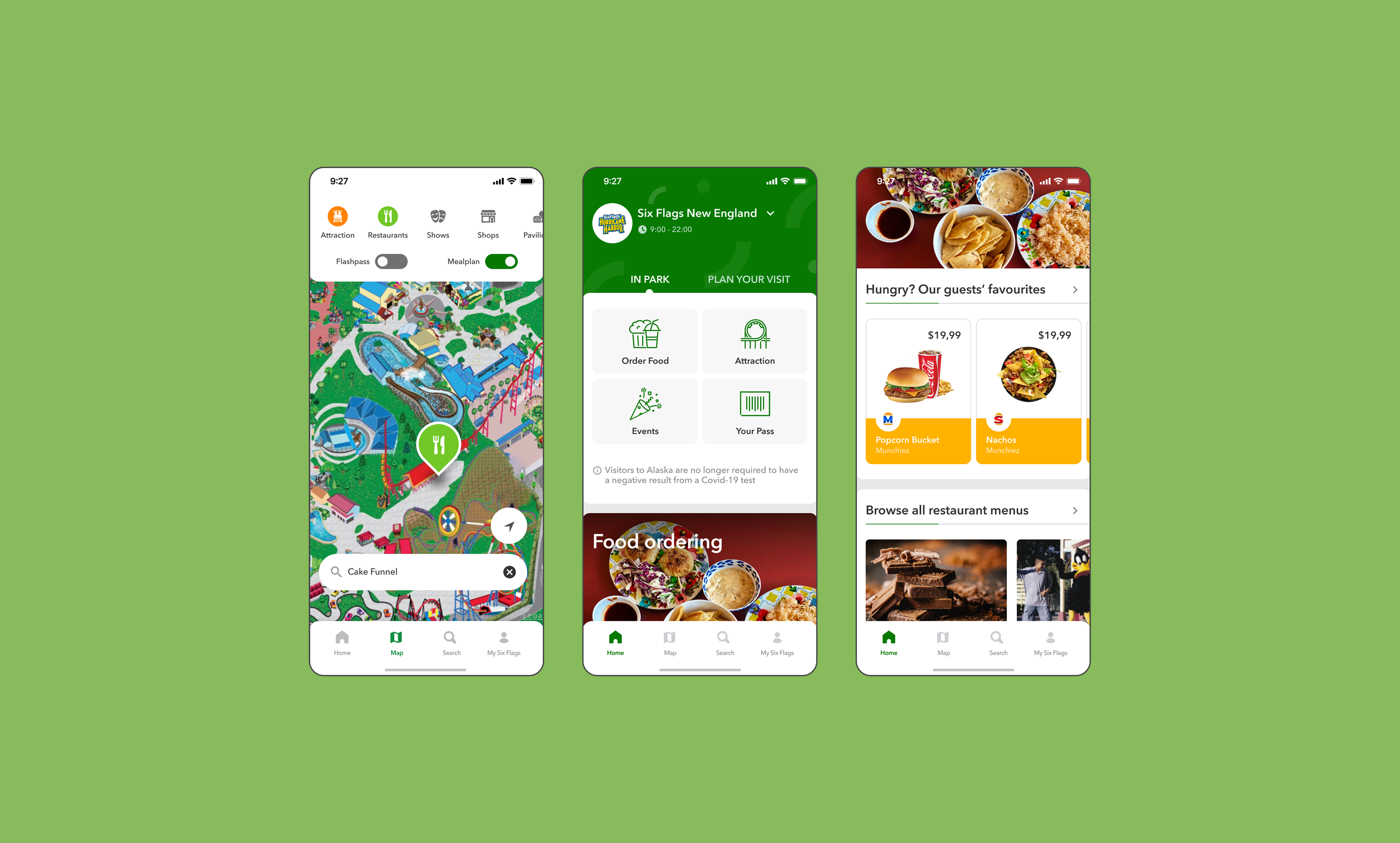
Six Flags operates 27 amusement parks across North America, with a mobile application serving over 2.4 million active users. The system worked, but increasingly struggled: application crashes were damaging the user experience, DevOps processes were outdated, and release velocity could not keep pace with business needs. The core modernization goal was clear—restore stability and deliver a UX that matched the product’s scale. Merixstudio refactored the codebase using Clean Architecture principles, migrated CI/CD pipelines to GitHub Actions, implemented automated end-to-end testing, and delivered a concrete UX improvement package based on a full interface audit.
Outcome: 97% reduction in application crashes across 2.4 million active users.
More about the Six Flags mobile app modernization
UX modernization for a large-scale intelligence platform — Hozint (Intelligence & Security)
.png)
Hozint delivers a threat intelligence platform to financial institutions and government agencies, managing a database of over one million automated alerts. The problem was not the data—it was the interface. Analysts working under time pressure could not quickly assess threat severity or geographic location. Merixstudio rebuilt the frontend and design system: a clean visual hierarchy, unified views for AI-generated and human-verified alerts, and advanced geospatial capabilities via MapLibre, custom polygon drawing, and dynamic geofencing.
Outcome: faster platform performance and improved search precision—analysts identify risk patterns earlier with lower cognitive load.
More about the Hozint platform
Full rewrite in a highly regulated market — Business Insurance App (Insurance, USA)
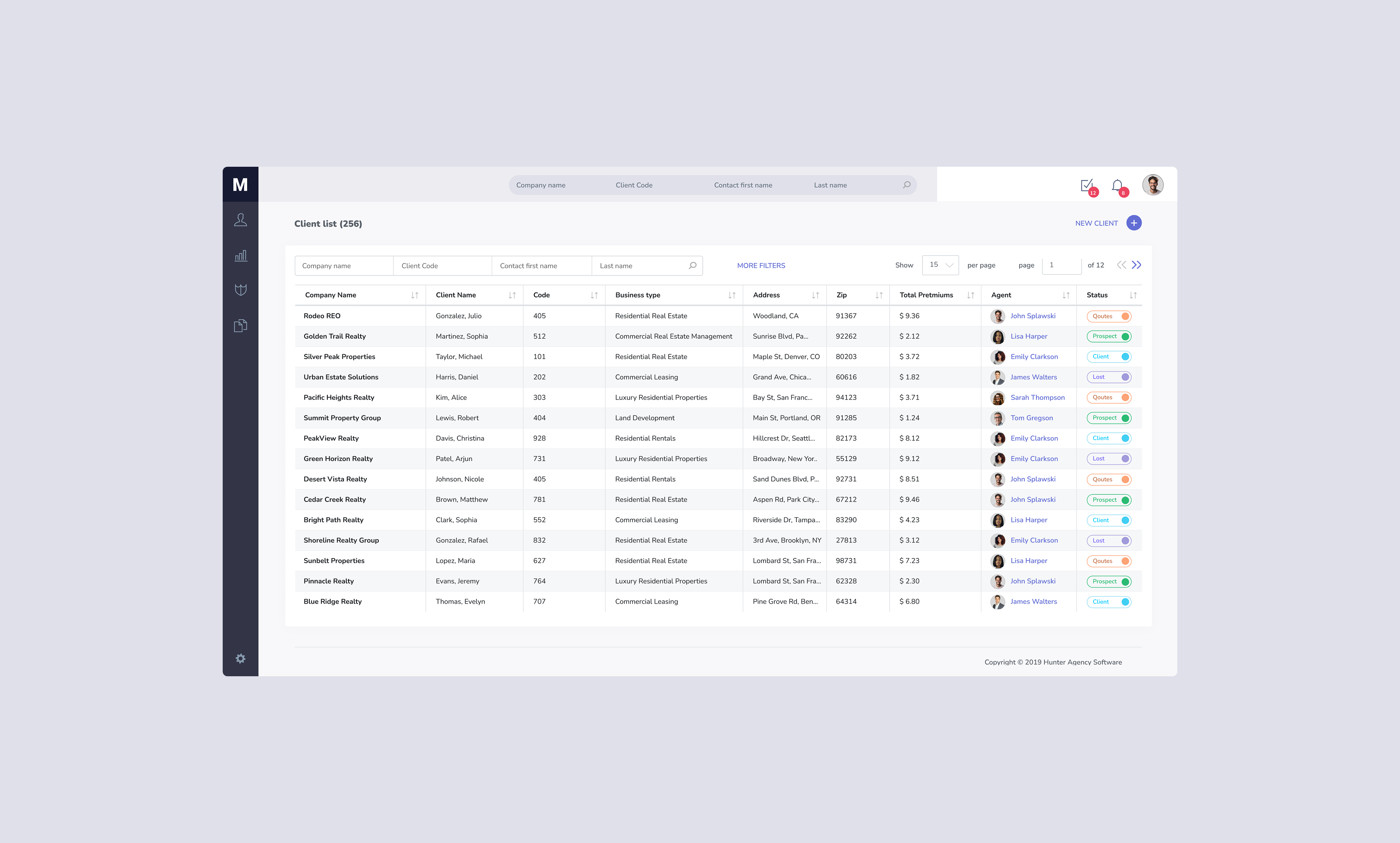
A well-established American insurance agency operated on a legacy platform built on ColdFusion—fragmented, slow to change, and requiring manual data reconciliation across disconnected systems. Operating in a heavily regulated market with a long institutional history meant every change had to be managed carefully. Merixstudio executed a full rewrite using an API-first architecture (Python + React), redesigned the information architecture across 100+ high-fidelity wireframes, and embedded automated testing throughout. A 14-person team at peak delivered the production system in 9 months.
Outcome: a scalable platform with streamlined workflows and improved employee experience—in an environment where compliance and UX have to work together.
More about the modernization of a US business insurance app
Modernization for demanding offshore conditions — SafeEx (Oil & Gas, Denmark)
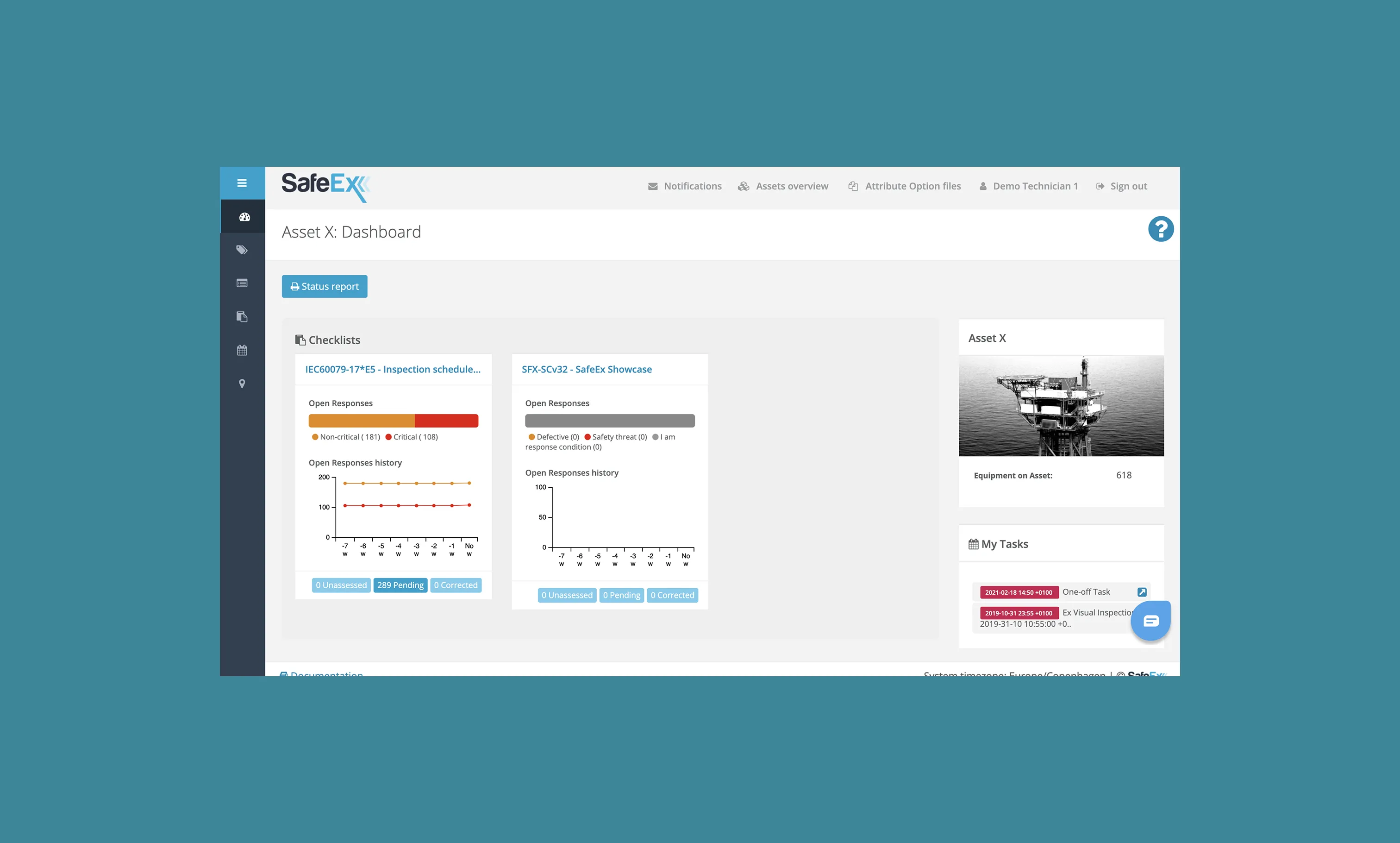
SafeEx provides inspection and maintenance software for the oil and gas sector, used on offshore drilling rigs where connectivity is intermittent or completely unavailable. The system must work reliably without internet and sync accurately the moment a connection is restored. A ten-year-old platform needed modernization to better withstand these conditions—improving performance and making offline data synchronization robust enough for the realities of offshore operations. Merixstudio applied a gradual modernization approach: refactoring critical backend modules, migrating core databases to PostgreSQL, re-engineering the Mobile App Push Synchronization API using Redis, and mapping a clear path to AWS infrastructure.
Outcome: up to 10x faster data screen performance, with reliable offline synchronization even under extreme offshore conditions.
More about the SafeEx case study
Performance modernization driven by global growth — Sensirion (Industrial IoT, Switzerland)
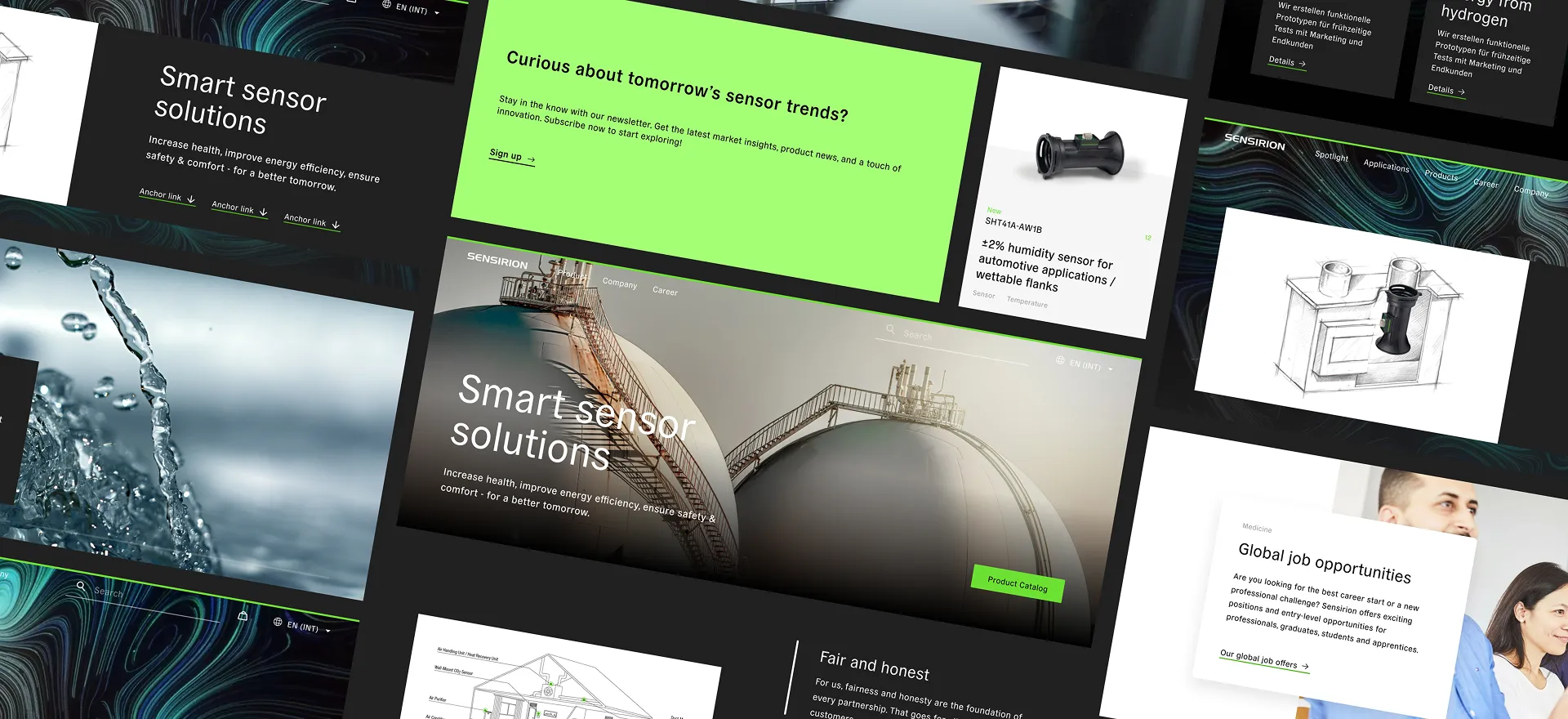
Sensirion, a Swiss manufacturer of high-precision environmental sensors, had expanded its global operations to the point where platform performance was becoming a business constraint—not just a technical one. As the organization grew in complexity, its corporate platforms struggled to meet the demands of multiple markets simultaneously, with latency directly impacting lead conversion. Merixstudio stepped in to address the performance bottlenecks at the platform level, enabling Sensirion's systems to scale with the organization's global reach.
Outcome: 80% reduction in web latency, 46% improvement in overall platform performance.
More about Sensirion case study
Best practices for software modernization
- Start with a portfolio audit, not an assumption that everything needs to be rebuilt. The TIME framework separates systems that require immediate action from those that can be safely left for now—preventing budget from flowing to low-priority work.
- Evaluate the business case through TCO, not upfront project cost. Modernization requires capital, but the cost of inaction—compounding technical debt, a contracting talent market, and rising compliance exposure—is structurally higher over a 3–5 year horizon. The calculation usually makes the case for action on its own.
- Validate process knowledge with operational users. System documentation is frequently outdated. Managers know what a system outputs; the people using it daily know why specific legacy behaviors exist. Capturing that knowledge early prevents critical gaps from appearing during rollout.
- Choose a phased delivery approach over a big-bang replacement. The strangler fig pattern—incrementally replacing old components with new ones—keeps risk manageable and allows the roadmap to adjust based on real-world feedback at every stage.
- Secure executive sponsorship from day one. Frame the modernization case in business terms: TCO reduction, faster time-to-market, reduced operational risk. Technical debt arguments belong in engineering discussions. The board needs a clear commercial rationale.
Conclusion
Software modernization is a strategic business decision—one that determines how quickly an organization can move, compete, and respond to change over the next several years. Legacy maintenance costs keep rising, the specialized talent market is contracting, and security vulnerabilities compound. Without a modernized software and data foundation, AI adoption stays out of reach, time-to-market slows, and the capacity to respond to market dynamics erodes.
The path forward requires structure: an honest portfolio inventory, prioritization through the TIME framework, strategy selection via the 7 R's, and iterative delivery instead of big-bang replacement. And it requires business-level sponsorship from day one—because modernization without an owner outside of IT will lose priority at the first difficult quarter.
If you are mapping out a modernization roadmap or evaluating where to start — let's talk about your project.
Sources
[1] ResearchAndMarkets.com, Legacy Software Modernization Global Market Report 2025, January 2026. GlobeNewsWire.
[2] U.S. Government Accountability Office, GAO-21-524T: Agencies Need to Develop and Implement Modernization Plans for Critical Legacy Systems, April 2021.
[3] U.S. Government Accountability Office, GAO-16-696T: Federal Agencies Need to Address Aging Legacy Systems, May 2016.
[4] Stripe & Harris Poll, The Developer Coefficient: Software engineering efficiency and its $3 trillion impact on global GDP, September 2018.
[5] IBM & Ponemon Institute, Cost of a Data Breach Report 2025.
[6] MuleSoft, Vanson Bourne & Deloitte Digital, 2025 Connectivity Benchmark Report.
[7] Google Cloud / DORA, Accelerate State of DevOps Report 2024.
[8] Gartner, 2025 CIO and Technology Executive Survey (3,186 respondents, 88 countries), October 2024.
FAQ
Software modernization is the process of transforming existing systems—their architecture, code, infrastructure, or interfaces—to align them with current technological standards and business needs, without disrupting ongoing operations. It covers a spectrum of approaches: infrastructure migration (rehost), platform optimization (replatform), architectural restructuring (refactor/rearchitect), complete system rebuild (rebuild), or commercial replacement (replace).
Software modernization is a focused technical intervention that updates an organization's existing software assets and infrastructure. Digital transformation is a broader operational restructuring that changes business workflows, customer experiences, organizational culture, and business models using technology as the engine. Modernization enables transformation—it does not replace it.
The industry standard is the 7 R's framework: Encapsulate, Rehost (Lift & Shift), Replatform, Refactor, Rearchitect, Rebuild, Replace. Each strategy has a distinct application scenario, cost profile, and risk level, depending on the system's technical quality and business value.
When the cost of maintaining the system is rising faster than the value it delivers. Concrete indicators include growing legacy specialist costs, inability to integrate with new platforms or partners, falling release velocity, or compliance roadblocks that cannot be resolved without infrastructure changes.
The primary risks include underestimating project scope and timelines (especially in rebuild scenarios), hidden code dependencies in legacy systems, dual-system operational costs during the transition, scope creep, and user adoption resistance.
Timelines range from a few weeks for a targeted infrastructure rehost to 12–24 months for an enterprise-wide refactor or full system rewrite. An iterative delivery model allows the team to ship functional value throughout the process, rather than waiting for a single final release.
The 7 R's is a strategy classification framework that organizes modernization approaches by their level of structural intervention: Encapsulate, Rehost (Lift & Shift), Replatform, Refactor, Rearchitect, Rebuild, Replace. Each approach carries a distinct cost profile, risk level, and implementation horizon.
TIME (Tolerate, Invest, Migrate, Eliminate) is a portfolio management matrix that maps software applications across four quadrants based on business value versus technical quality. It helps organizations identify where modernization investment will deliver the highest return—and where resources are currently being consumed without commercial justification.

Aneta Mitura
Content Writer
Content marketing specialist and project manager with over 10 years of experience
view more posts by Aneta Mitura

Miłosz Kusiciel
Head of Technology
Head of Technology at Merixstudio with over 17 years of experience in software development and tracking emerging trends. He defines and executes Merixstudio's technology strategy, ensuring solutions are scalable, secure, and aligned with real business goals rather than technology for its own sake. In recent years, he has led the responsible adoption of AI within the company and played a crucial role in achieving ISO 9001 and ISO 27001 certifications - a concrete signal of his commitment to engineering quality and information security standards. Miłosz is an active member of ITCorner and Poznan City Lab, and a regular speaker at tech events like Pozitive Technologies and Tech of Tomorrow.
view more posts by Miłosz Kusiciel
.png)

.svg)
.svg)
.svg)
.avif)

.avif)
.avif)
.avif)
