.svg)









Our team of dedicated business analysts will come
back to you soon!
User-facing App Development
Simplify and enhance how people interact with your advanced, data-rich, and connected technologies.
What kind of technologies can User-facing Apps support?
Smart device & IoT
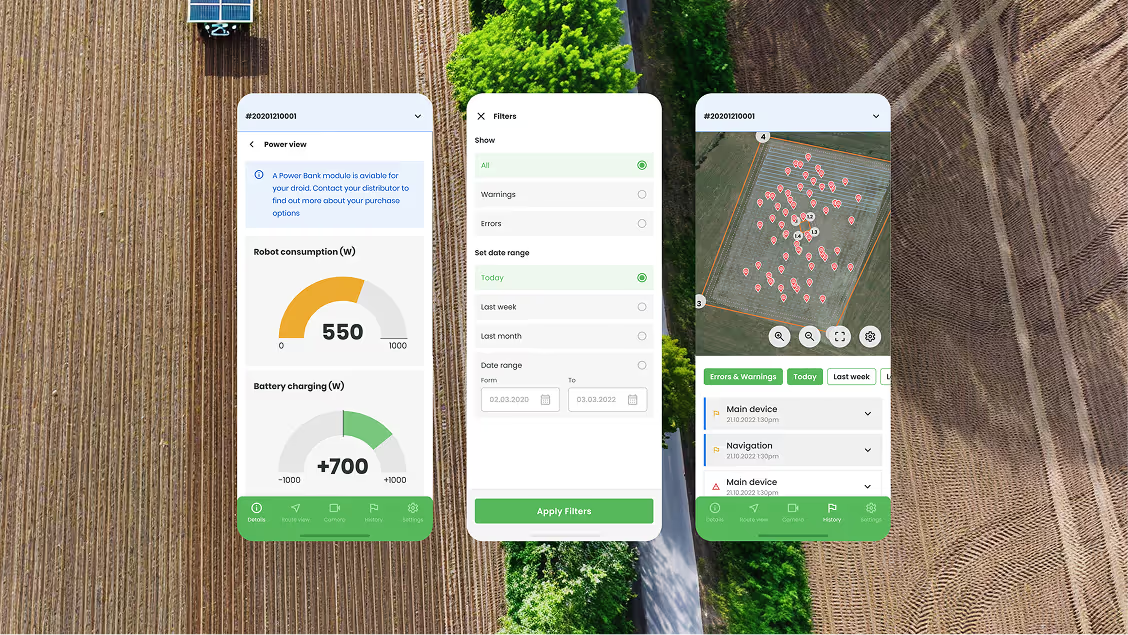
Where physical meets digital - our solutions enhance smart devices and sensor-based infrastructure with intuitive user experiences, management features, and remote capabilities that take functionality to the next level.
Device management & control
Remote monitoring and inspection
Real-time dashboards with live sensor data
Scheduling and automation rules
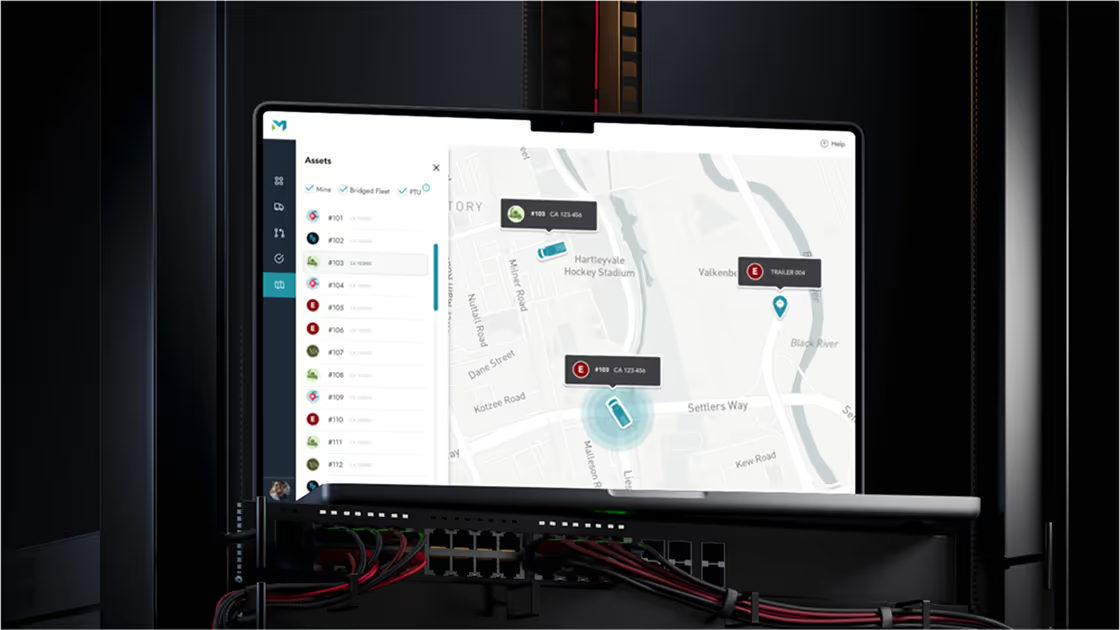
Interactive maps asset tracking device locations and status
Parameter control (e.g., temperature, brightness, speed)
Threshold-based alerts (e.g. overheating, low battery, connectivity loss)
Predictive maintenance based on usage patterns
Geofencing with automated triggers
Secure communication protocols (e.g., TLS, MQTT)
Data-rich platforms
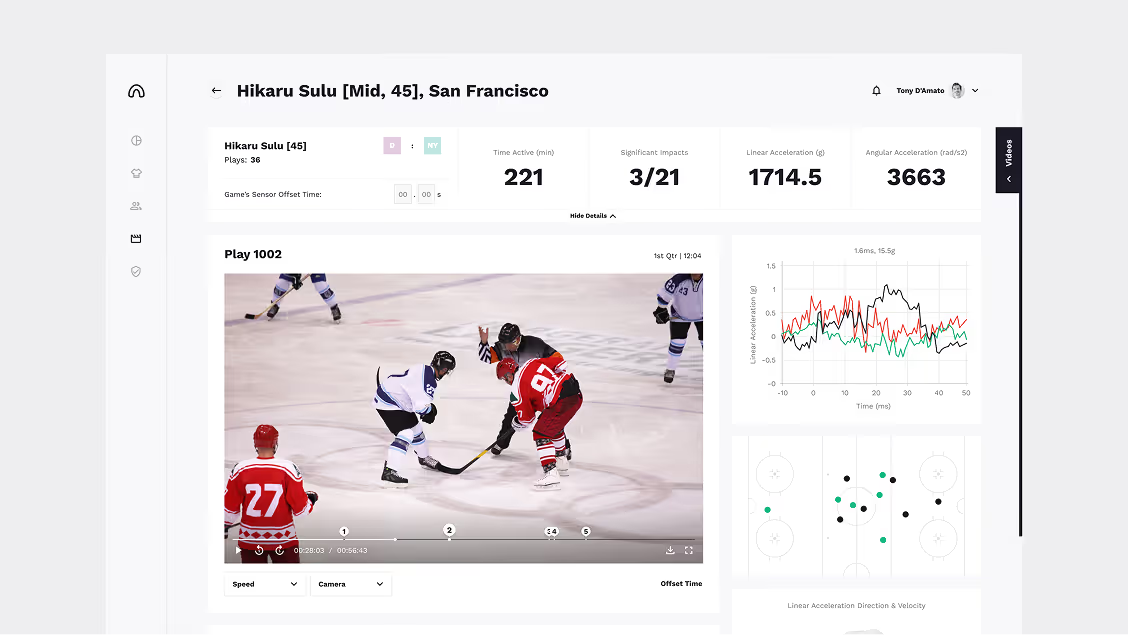
User-facing apps turn collected information into a real-time understanding. They equip data pipelines and analytics platforms with clear dashboards, diverse charts, and role-based views, empowering every user, not just data experts.
Customizable dashboards with real-time and historical views
Interactive charts, graphs, heatmaps, and treemaps
Drill-down and filtering for deeper insights
Role-specific views for different user types (e.g., operators vs. executives)
Descriptive, diagnostic, predictive, and prescriptive analytics
Integration with API cloud data services
GDPR, HIPAA, or industry-specific compliance features
Designing the architecture of the data flow system
Smart notifications tied to data events
The DNA of User-facing Apps
User-facing Apps make advanced technologies, such as smart devices, sensor-powered infrastructure, and data pipelines, accessible to end users. They unlock the full potential of innovations with usability layers, intuitive UI interfaces, interactive dashboards, and insightful data visualizations.
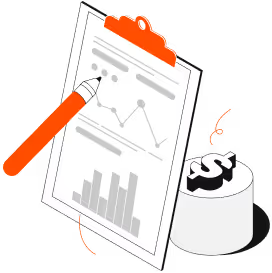
Tech works if people want to use it
Usability & Accessibility First
Focused on clarity, simplicity, and intuitive interaction to make even the most complex technologies feel effortless.
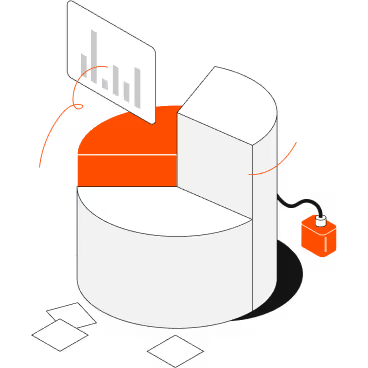
From raw data to real decisions
Data-Driven Intelligence
Making data accessible, visual, and actionable to help users of all levels extract meaningful insights and act with confidence, not guesswork.
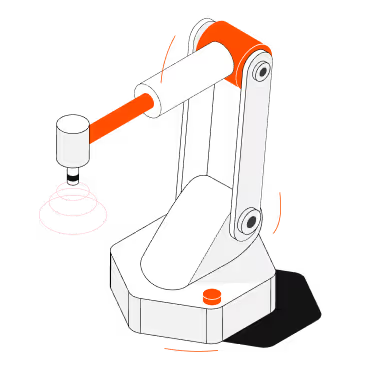
Make innovation feel familiar
Simplifying Advanced Tech
Simplify how people interact with powerful technologies - so they can unlock their value without needing to be experts.

Turning technology into market value
Product-Minded Approach
Transform tech into market-ready products, ensuring they fit the market, support long-term growth, and maximize ROI.
How User-facing Apps Make a Difference?


Is your product ready for users? Find out.
What can you gain with a User-facing App?
Shorter time-to-market
for MVPs and new features in digital or smart tech products.
Higher competitiveness
Through improved usability of digital and physical products.
Longer customer lifecycle
Supported by added-value services.
New revenue streams
Enabled by monetized or subscription-based applications.
Lower acquisition and retention costs
Taking care of existing products that need a boost.
Stronger brand positioning
As an experience-driven, user-aware innovator.
See what it means in numbers
.svg)
4
x
Faster data processing

~70
%
Less inspection time
.svg)
30
%
Surge in sales
https://pub-1a3eefcd59c54365ba9eca5710198018.r2.dev/beast-field-heat-animation.mp4
https://pub-1a3eefcd59c54365ba9eca5710198018.r2.dev/beast-field-heat-animation.mp4
Clutch’s No. 1 software company
Ranked 5th overall and 1st among all software development firms on the Clutch 1000 list.
Certified processes and security
Our workflows and security practices are backed by ISO 9001 (quality) and ISO 27001 (information security).
Faster delivery through AI & boilerplates
We speed up development with a proven tech stack, reusable modules and responsibly applied AI.
Security, IP, and control stay with you
Our solutions are designed to scale without compromising your intellectual property. All tech and data remain under your full control.
Human-Centered digital experiences
We consistently advocate for real user testing, usability validation, and accessible design to keep people at the heart of innovation.
Not just advisors. Never “yes-men”
We ask tough questions, challenge assumptions, and give honest feedback. Once the direction is clear, we bring ideas to life with full-stack teams.
True ownership
Our mature project and risk management enable us to take full responsibility for delivery, so your experts can focus on core innovation.
From raw tech to market-ready products
We help shape advanced solutions into usable, scalable products that fit the market and deliver ROI.
Advanced analytical roles
With business and technical analysts we tackle even the most complex challenges - shaping smart, data-driven solutions that deliver real value.
25+ years of helping innovators
Since 1999, we’ve supported innovators worldwide - from revolutionary tech to industry-specific tools. Proven by nearly 100 Clutch reviews.
Your technology is ready. Are your users?
Let's find out

Industry-specific benefits of User-facing Apps
Facility Management
Simplify building operations and maintenance with intuitive interfaces, smart system control, and real-time monitoring - from energy efficiency to lightning systems.
Smart City Ecosystem
Improve quality of life and city operations by making complex urban technologies easier to manage, visualize, and scale - from sensor networks to citizen-facing platforms.
Research & Analytics
Accelerate data-driven work through user-friendly dashboards, intelligent visualizations, and tools that make advanced insights accessible to every stakeholder, not only data engineers.
Sports
Support performance and sport facility management with smart monitoring apps, real-time data visualization, and intuitive tools for coaches, athletes, and operations teams.

Healthcare
Enable health monitoring and care delivery through apps connected to wearables, medical devices and systems for both individuals and professionals.

Industry 4.0
Streamline production and prevent costly downtime with intuitive apps for equipment monitoring, predictive maintenance, and performance insights.

See our User-facing Apps in action
Our User-facing Apps process
Deliverables

Strategic clarity across teams, enabling faster and more aligned execution

Focused innovation roadmap grounded in user and business needs

Reduced project risk through early technical and operational insight

Strong baseline for efficient design, development, and delivery phases
We begin by aligning with stakeholders to clarify business goals, innovation drivers, and success metrics. Through user research, interviews, and (if possible) on-site visits, we map the product vision and identify key user groups and pain points. We also audit the existing tech ecosystem, including devices, APIs, infrastructure, and integrations, to understand technical opportunities and constraints.
Deliverables
Intuitive and role-specific UI concepts
Tested and validated experience ready for implementation
UX decisions aligned with business and technical goals
We design user flows tailored to specific roles and contexts of use, creating wireframes and high-fidelity prototypes that prioritize clarity and usability. Our team incorporates accessibility, localization, and adaptability from the start. All designs are tested with real users to validate the experience before development.
Deliverables
Scalable architecture ready to support devices and data streams
Documented data model and integration map
Clear foundation for backend and frontend development
As data and smart devices lie at the heart of every Tech Experience app, our solutions are designed around them from day one. This includes selecting the right software development approach, defining communication protocols (e.g., MQTT, REST, BLE), and planning for scalable, future-proof infrastructure. We architect full-stack systems that enable real-time data processing and seamless interaction with connected devices. At the same time, we audit and integrate relevant data sources - including APIs, sensors, and platforms - and build a secure integration layer.
Deliverables
A fully functional app ready for scaling and further development
Advanced data presentation, control, and automation features
Reliable integration with device and real-time responsiveness
Real-time monitoring and maintenance in place
We develop scalable backend services and APIs to handle data processing, business logic, and real-time scenarios. Our frontend team builds dashboards, control panels, and data visualizations (charts, heatmaps, interactive maps), integrating closely with connected devices and IoT systems. We ensure performance, security, and real-time responsiveness across the stack. Once development is complete, we configure the cloud infrastructure, set up CI/CD pipelines, and deploy the full system.
Deliverables
Verified system stability and performance
Refined experience across all touchpoints
Quality assurance across all layers
Testing covers all key layers of the product - from functionality and performance to integration and security - to ensure smooth operation in real-world conditions. Usability testing is always recommended as part of the process and, when possible, we conduct it with real end users. After validation, the system is optimized for speed, responsiveness, and efficient resource usage, making it ready for reliable use at scale.
AI-augmented delivery with measurable impact
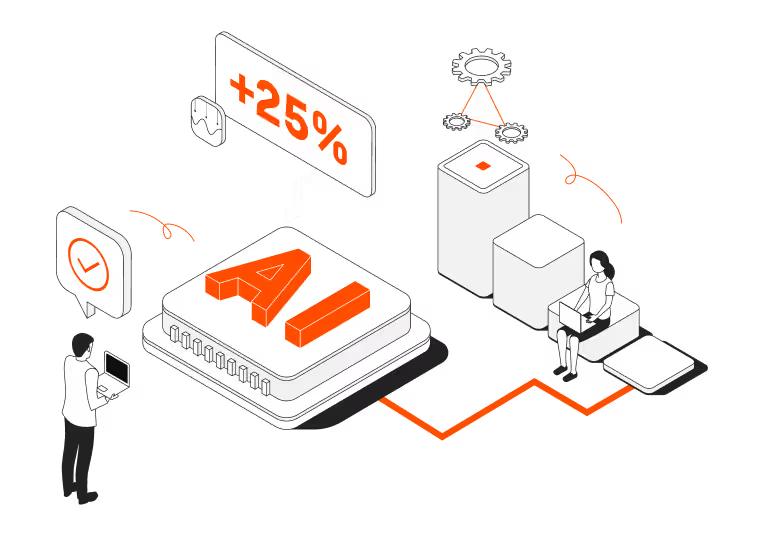
Our teams use AI across day-to-day delivery workflows, from coding and testing to analysis and documentation.
We track its impact through DORA metrics, and on selected tasks it can accelerate delivery by up to 25%.
See how we integrate AI into our process
Does that work? Don’t take just our word for it!
Our company has talented engineers (...), but we lack experience in UX and UI. Engineers and scientists see the world differently, and our software is for regular people or technically inclined people (...). Your expertise helps us create more usable products for a broader audience, rather than just the structured, technical approach of our team members.

Ben Huddleston
Senior Engineer, Biocore

Your service helps us make more informed decisions. Often, our initial idea isn’t what 95% of users would prefer, so your objectivity is crucial. Without your team, we wouldn’t be able to innovate or release new features as frequently as we do.
Product Owner, HYDAC Group
-1%201.svg)
We had changing requirements and changing team members but we always found a fast replacement in short terms - you always were able to respond. You always had devops, solution architects - people with different expertise available.

Dr Michael Auth
Project Manager in Research & Development, RP Group

What Merix has been capable of is basically to look at what we’re saying, understand not what we’re asking for, but what the idea behind what we're asking for is. And that way they’ve able to understand our needs and our processes to develop a product that is correct for us rather than just to do what we say.

Alex Sloth
Head of After Sales Services, Farmdroid

Merixstudio helps me solve problems and presents solutions in an easy-to-use, performant package. The software is simple, making it easier to understand complex things. The ultimate goal is not just building software but creating something that people use and that has downstream effects.
Ben Huddleston
Senior Engineer, Biocore
Oops! Something went wrong while submitting the form.
Frequently asked questions
A user-facing app is the software layer that makes advanced technologies - smart devices, sensor-powered infrastructure, data pipelines, connected systems - accessible and usable for real people. Without it, even the most sophisticated technology stays locked behind raw data, technical interfaces, or command-line tools that only engineers can interpret. User-facing apps translate that complexity into intuitive dashboards, control panels, mobile interfaces, and data visualizations that operators, technicians, managers, and end customers can actually use. For technology companies, this layer is what turns an innovation into a product - something people adopt, rely on, and are willing to pay for.
We build user-facing apps across many types of technology environments, but two categories are where we see the strongest demand and deliver the most value. Smart device and IoT environments, where the app provides device management, remote monitoring, real-time dashboards with live sensor data, scheduling, automation rules, interactive maps with asset tracking, parameter control, threshold-based alerts, and predictive maintenance capabilities. And data-rich platforms, where the app equips analytics and data pipelines with customizable dashboards, interactive charts, heatmaps, drill-down filtering, role-specific views for different user types, and compliance features for GDPR, HIPAA, or industry-specific requirements. In both cases, the app is designed around the specific users who need to interact with the technology - not around the technology itself.
Standard web or mobile development typically starts from a set of features and user stories. User-facing app development starts from the technology that already exists - devices, sensors, data streams, APIs, infrastructure - and works backward to the people who need to use it. This means the development process involves understanding hardware communication protocols (MQTT, REST, BLE), designing for real-time data flows and high data volumes, building interfaces that serve multiple user roles (operators, technicians, managers, end customers) with different levels of technical proficiency, and architecting systems that handle unreliable connectivity, continuous sensor streams, and edge cases that don't exist in typical web apps. The UX challenge is also different: making complex, data-heavy information feel clear and actionable - not just visually polished.
A typical IoT mobile app development project or web-based user-facing app for smart devices includes device management and control interfaces, remote monitoring and inspection dashboards, real-time data visualization with live sensor feeds, scheduling and automation rule configuration, interactive maps tracking device locations and status, parameter control (temperature, brightness, speed, and similar), threshold-based alerts for anomalies like overheating, low battery, or connectivity loss, and secure communication layers using protocols like TLS and MQTT. The exact feature set depends on your devices, your users, and how they need to interact with the system day to day. We design around those real use cases - not a generic template.
Our process has five phases. Discovery and Analysis aligns stakeholders on business goals, maps user groups and pain points, and audits the existing tech ecosystem including devices, APIs, and infrastructure. UX/UI Design creates role-specific user flows, wireframes, and high-fidelity prototypes - tested with real users before development begins. Architecture and Integration defines communication protocols, data models, and a scalable integration layer connecting all relevant data sources. Development and DevOps builds the backend services, frontend interfaces, dashboards, data visualizations, and integrations with connected devices - followed by cloud infrastructure setup and CI/CD pipelines. Testing and Optimization covers functionality, performance, integration, security, and usability validation across all layers. Each phase builds on the previous one, and we involve real users wherever possible to validate that the app actually works for the people it's designed for.
User-facing apps serve different audiences depending on the product. For industrial and facility management environments, the primary users are operators, technicians, and facility managers who need to monitor equipment, respond to alerts, and manage assets remotely. For connected consumer products, the users are end customers interacting with the device through a companion app. For data-rich platforms, the users range from field researchers and analysts to executives who need different views of the same underlying data. For field operations - agriculture, inspection, maintenance - the users are people working in the field with limited connectivity, who need simplified, reliable interfaces that work offline or on intermittent networks. What makes user-facing app development specific is that the same system often needs to serve multiple user types - each with different levels of technical proficiency, different workflows, and different information needs. We design role-based views and experiences that serve each group without creating separate products.
Yes - this is one of our most common engagement models. You already have devices, sensors, APIs, or data pipelines in place, and you need the software layer that makes that infrastructure usable for your team or your customers. We integrate with your existing technology stack - whether that's MQTT-based device communication, cloud data pipelines on AWS, REST or GraphQL APIs, or third-party platforms - and build the user-facing layer on top. This includes dashboards, control panels, mobile apps, alerting systems, and reporting interfaces. We don't need to rebuild your infrastructure; we design the integration architecture to work with what you have and scale as your product grows.
User-facing apps create the most value in industries where advanced technology needs to be operated, monitored, or understood by people who aren't engineers. Facility management - where building management system software helps simplify operations, energy efficiency, and maintenance of complex building systems. Smart city ecosystems - where sensor networks and citizen-facing platforms need clear interfaces for both operators and residents. Sports and health - where real-time data from sensors and wearable devices needs to be visualized for coaches, athletes, and medical teams. Industry 4.0 and manufacturing - where industrial monitoring software and predictive maintenance software help prevent downtime and optimize production. Healthcare - where apps connected to medical devices and wearables support both patients and professionals. Research and analytics - where dashboards make advanced insights accessible to stakeholders beyond the data engineering team.
Real-time data visualization is at the core of most user-facing apps we build. Our approach includes designing sensor data visualization interfaces that present live readings in formats users can actually interpret - charts, heatmaps, interactive maps, and status indicators rather than raw numbers. We architect backend systems that handle continuous sensor streams reliably, including buffering, aggregation, and downsampling for historical views. For real-time scenarios, we use WebSocket connections or similar push-based patterns to update interfaces without requiring page refreshes. For map-based workflows, we integrate with Mapbox, Google Maps, or Leaflet depending on the use case. The design challenge isn't just displaying data - it's presenting the right data to the right user at the right moment so they can make decisions without information overload.
Look for a partner that understands both sides of the equation: the technology underneath and the people who need to use it. Many development companies can build interfaces - fewer can design experiences for complex, data-heavy, connected environments where the user isn't a tech expert. Ask whether they have experience working with IoT systems, sensor data, and real-time infrastructure (not just standard web apps). Check whether they bring UX research and user testing capabilities - because making advanced technology feel intuitive requires more than good visual design. And ask whether they can take the project from discovery through architecture, design, development, and testing under one roof. An iot software development company that separates strategy from execution risks losing the context that makes user-facing apps effective.
The outcomes depend on the product and the industry, but patterns are consistent across our projects. Shorter time-to-market for MVPs and new features in digital and smart technology products. Higher competitiveness through improved usability - making your product easier to adopt than alternatives with clunky interfaces. Longer customer lifecycle supported by added-value services delivered through the app. New revenue streams enabled by subscription-based or monetized applications layered on top of existing hardware or infrastructure. Lower acquisition and retention costs by improving the experience of existing products. In our case studies, this translates into specific numbers: 4x faster data processing for Biocore, approximately 70% less inspection time for RP Group's CC24 system, and a 30% surge in sales for Autarq's customer platform.
Security is built into the architecture from day one - especially critical when the app connects to physical devices, sensor networks, or sensitive operational data. Our approach includes secure communication protocols (TLS, MQTT with encryption) between devices and the application layer, role-based access control tailored to different user types - operators, technicians, administrators, end users, encrypted data in transit and at rest, compliance with GDPR, HIPAA, or industry-specific regulations where applicable, automated security scanning integrated into CI/CD pipelines, and ISO 27001 and ISO 9001 certified processes backing our development work. For systems handling sensitive operational data - including environmental monitoring software or building management platforms - we also apply privacy-by-design principles to ensure data handling meets regulatory expectations.
HMI software - short for human machine interface software - is the layer that allows people to monitor, control, and interact with machines, devices, and industrial systems through a digital interface. Traditionally, HMI meant a physical panel on a factory floor connected to a PLC or SCADA system. In modern environments, hmi software increasingly means web-based dashboards, mobile apps, and cloud-connected interfaces that provide the same monitoring and control capabilities - but accessible remotely, across devices, and with the kind of UX quality that today's users expect. User-facing app development is a broader concept that includes HMI as one of its most common application types. When we build operator interfaces for connected devices, real-time monitoring dashboards, or control panels for industrial infrastructure - that's HMI development delivered with the same UX standards and engineering practices we apply to any user-facing application.
Our HMI design approach starts from the user - not the machine. Traditional HMI design often prioritizes system architecture and data structure, resulting in interfaces that make sense to engineers but confuse operators. We flip that: we research who the actual users are, what decisions they need to make, what information they need at each moment, and what level of technical proficiency they bring. From there, our hmi ux design process creates role-specific interfaces - an operator monitoring a facility sees different views than a maintenance technician running diagnostics or a manager reviewing performance data. Our hmi development work includes real-time status displays and control panels, alarm management and notification systems, historical data views for trend analysis and diagnostics, touch-optimized interfaces for on-site environments, and integration with device APIs, sensor data streams, or MQTT-based communication layers. We don't work directly with PLCs or embedded firmware - we build the web and mobile software layer that sits above your industrial infrastructure and makes it accessible to the people who need to use it.
Traditional SCADA HMI systems are typically proprietary, hardware-dependent, and designed for on-site use by specialized operators. Modern web-based HMI - which is what we build - runs in a browser or mobile app, is accessible remotely, and can serve multiple user types with role-based views and modern UX patterns. The practical differences include accessibility (any device with a browser, anywhere, not just a panel on the factory floor), user experience (designed for clarity and usability, not just data display), scalability (cloud-hosted, supporting multiple sites and users simultaneously), integration (connects with modern APIs, cloud services, and data platforms - not just industrial protocols), and cost (no proprietary hardware or specialized licenses). We don't replace SCADA systems - we build the user-facing layer on top of or alongside them, making the data and controls they provide accessible to a broader set of users through modern, intuitive interfaces. For organizations exploring hmi scada software alternatives or complements, this hybrid approach often delivers the most value with the least disruption.
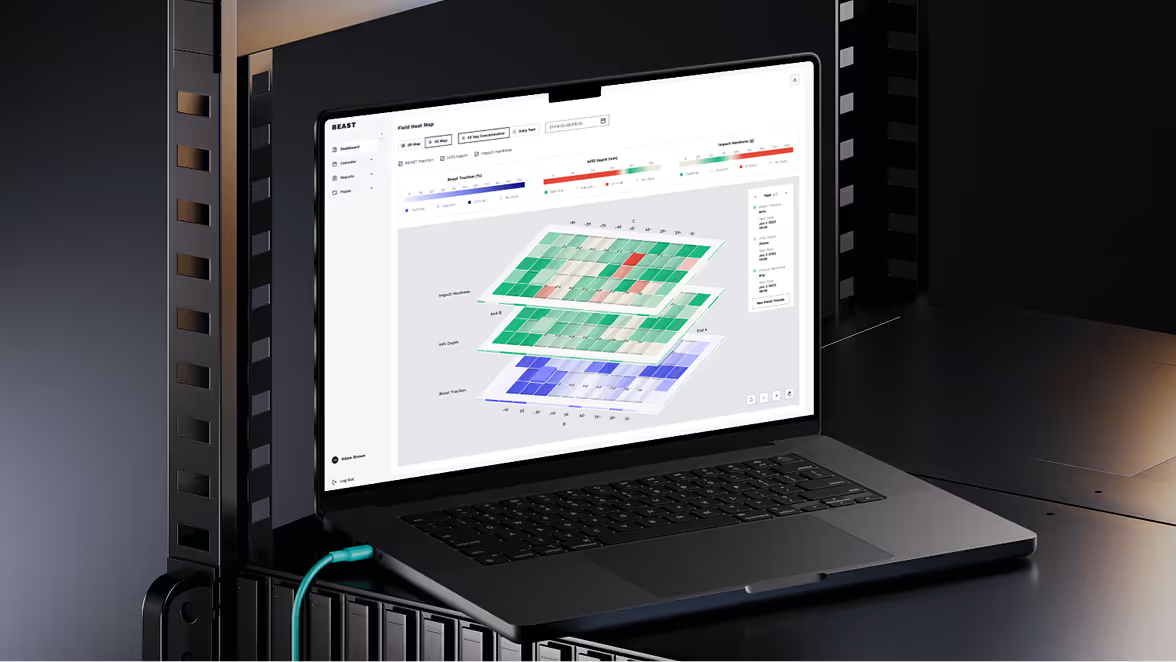
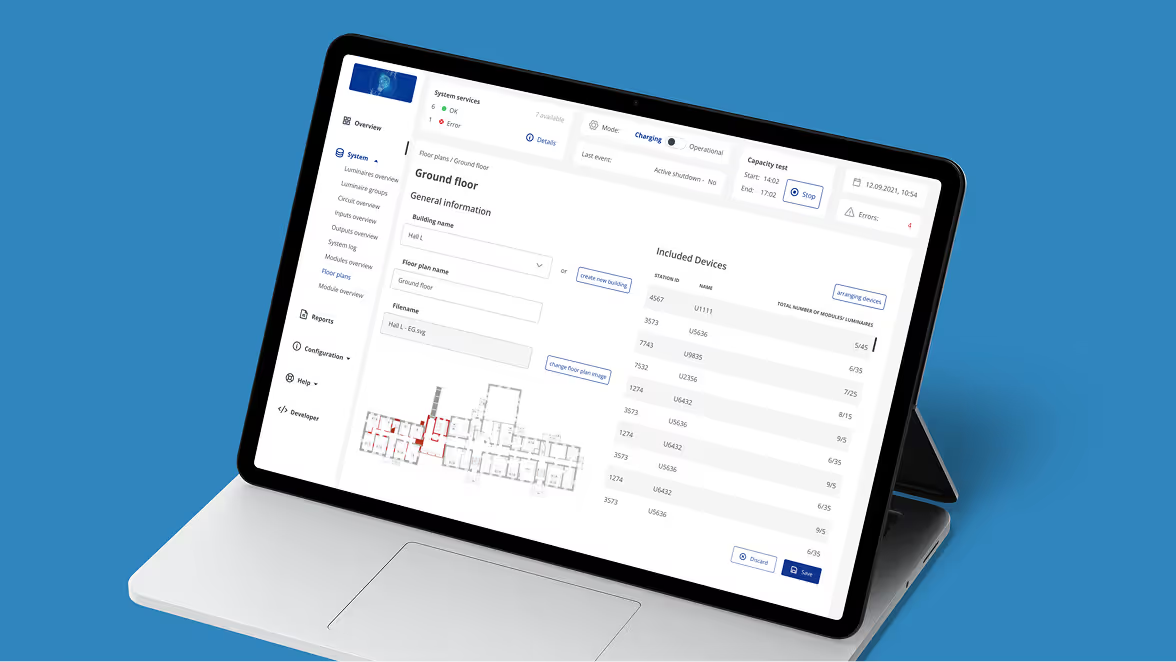
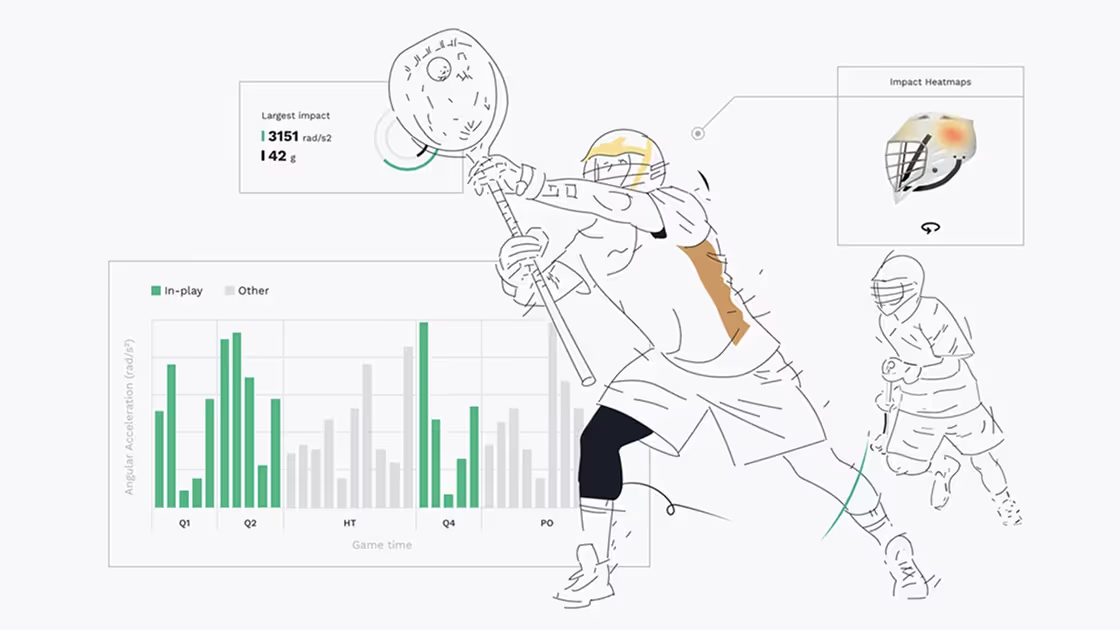
Our user-facing app work includes several notable projects. For Biocore BEAST, we built a web application that turns ground-based turf inspection data into actionable insights for sports field managers - enabling high-quality data-driven decisions for daily operations. For RP Group's CC24 system, we developed a backend-heavy platform that makes managing emergency and safety lighting systems intuitive through a web interface, reducing inspection time by approximately 70%. For FarmDroid, we created web and mobile apps for remote management of the world's first automatic seeding and weeding robot - combining real-time device communication with map-based workflows. For Biocore MGS, we built a scalable application that enabled biomechanical engineers to analyze impact data 4x faster through advanced visualizations. And for GoMetro, we developed a telemetry-based vehicle location platform for fleet management in South Africa. What connects these projects is the shared challenge of making complex, data-rich, connected technology accessible to everyday users.
User-facing apps sit at the intersection of complex backend systems and polished user interfaces - which means the development involves both data-heavy backend work (API integration, data processing, protocol handling) and frontend-intensive work (dashboards, visualizations, responsive layouts). AI-augmented delivery accelerates both sides: on the backend, AI assists with API scaffolding, data transformation logic, and test generation; on the frontend, it speeds up component creation, responsive adaptations, and accessibility markup.
To keep AI output consistent with the project's architecture and design system, we follow Spec Driven Development: every feature starts with a validated specification and acceptance criteria before implementation. Engineers review every AI-generated component, endpoint, and integration against the spec - ensuring the app behaves exactly as defined.
We measure the impact through DORA metrics, giving clients clear visibility into how AI supports faster delivery, fewer bugs, and shorter feedback loops. Based on feedback from our entire engineering team, AI can accelerate selected tasks such as code generation, debugging, refactoring, and test automation by up to 25%.
Every AI tool we use is vetted by our technical and legal teams and governed by clear internal security policies. In our latest internal survey, 94% of team members confirmed awareness of data security rules for AI usage, and no project data is ever used to train external models.
.svg)
.svg)
.svg)
.avif)

.avif)
.avif)
.avif)
