.svg)


Cloud Engineering & DevOps Services
AI-augmented cloud and DevOps engineering, tracked through DORA metrics.





Cloud and DevOps
engineered for how you actually ship
Your cloud infrastructure should accelerate delivery, not slow it down. We design, migrate, automate, and optimize cloud environments that support how your product actually ships - with the automation, security, and cost discipline that mid-sized and enterprise teams need to move fast without breaking things.
Our DevOps engineers work within an AI-augmented delivery model, following Spec Driven Development practices where every infrastructure change starts with a validated specification before implementation. We track delivery performance through DORA metrics - Deployment Frequency, Lead Time for Changes, Change Failure Rate, and Mean Time to Recovery - giving you transparent visibility into how your infrastructure supports your release cycle.
As an AWS Select Tier Services Partner with certified engineers across Docker, Kubernetes, Terraform, and modern CI/CD tooling, we bring both the cloud expertise and the software delivery context to make infrastructure decisions that make sense for your product - not just your servers.
Accelerate product delivery
Automate your CI/CD pipelines, reduce manual deployment steps, and shorten the path from code commit to production. We track improvement through DORA metrics - so acceleration is measurable, not assumed.
Maximize resource efficiency
Right-size your cloud resources, eliminate idle infrastructure, and configure auto-scaling that responds to actual demand. Most organizations overpay for cloud by 20–40% - we help you stop.
Scale with confidence
Design infrastructure that handles growth without over-provisioning. Container orchestration with Kubernetes, Infrastructure as Code with Terraform, and cloud-native architecture mean you scale when you need to - not before.
Secure your infrastructure
Integrate security into every layer: encrypted data flows, least-privilege access policies, automated vulnerability scanning in CI/CD, and ISO 27001-certified processes. Proactive security costs less than reactive incident response.
How we help

Transitioning from an on-premise IT infrastructure to a cloud environment enables businesses to harness the power of scalable resources and innovation. This service not only enhances flexibility but also offers potential cost savings and better disaster recovery options.
Alternatively, cloud-to-cloud migration allows organizations to shift to a different cloud provider (such as AWS, GCP, or Azure) for improved services, better pricing, or enhanced capabilities. Both migrations position a business for a future of dynamic growth, allowing for rapid scaling, global reach, and continuous integration and deployment of services.

A cloud audit is a comprehensive review of the organization's existing cloud architecture. This process identifies security vulnerabilities, ensures compliance with regulations, and verifies that cloud resources are being used optimally.
The outcome includes increased security, better compliance posture, better performance, and
a roadmap for cloud optimization.

Optimizing costs across AWS, GCP, and Azure ensures that clients pay only for the cloud resources they need.
This service involves analyzing usage patterns, right-sizing resources, and employing cost-saving strategies like reserved instances and auto-scaling. The benefits include reduced overhead, maximized ROI on cloud spend, and a leaner cloud footprint.

Elevating the client's team's DevOps capabilities through targeted tool introductions, training sessions, documentation, and consulting leads to more efficient development cycles and a culture of continuous improvement.
The results are faster time-to-market, improved collaboration, and higher-quality software deployments.
-Implementation_1176x676px.webp)
Implementing IaC with Terraform or Ansible automates the provisioning and management of infrastructure.
This leads to faster and more consistent environment setups, reduced manual errors, and a more agile response to infrastructure changes required by business needs.

Developing and refining CI/CD pipelines using tools like GitLab CI, GitHub Actions, or Azure DevOps automates the software deployment and testing process.
This enables teams to deliver code changes more frequently and reliably, improving the release process and accelerating the feedback loop.

Modernizing applications with containers using Docker, Kubernetes, or AWS ECS provides a lightweight, portable, and consistent application environment.
Benefits include easier scalability, more efficient resource use, and the ability to leverage microservices architecture for complex applications.

Updating the technology stack improves the maintainability of infrastructure by keeping software up-to-date and leveraging modern tools and practices.
This ensures better performance, enhanced security, and the ability to integrate with the latest tech innovations.

Introducing new services like MongoDB or Kafka into your infrastructure enhances its capabilities, allowing for improved data management, real-time processing, and better scalability.
This support ensures a smooth transition and integration, enabling you to leverage powerful new functionalities.

Crafting and maintaining a monitoring and alerting stack with tools like AWS CloudWatch, Prometheus, Grafana, and Azure Monitor enables proactive system health and performance management.
This ensures high availability, quick incident response, and a superior user experience by preventing potential issues before they affect end-users.

Cutting edge tech to solve your challenges


Mobile app modernization
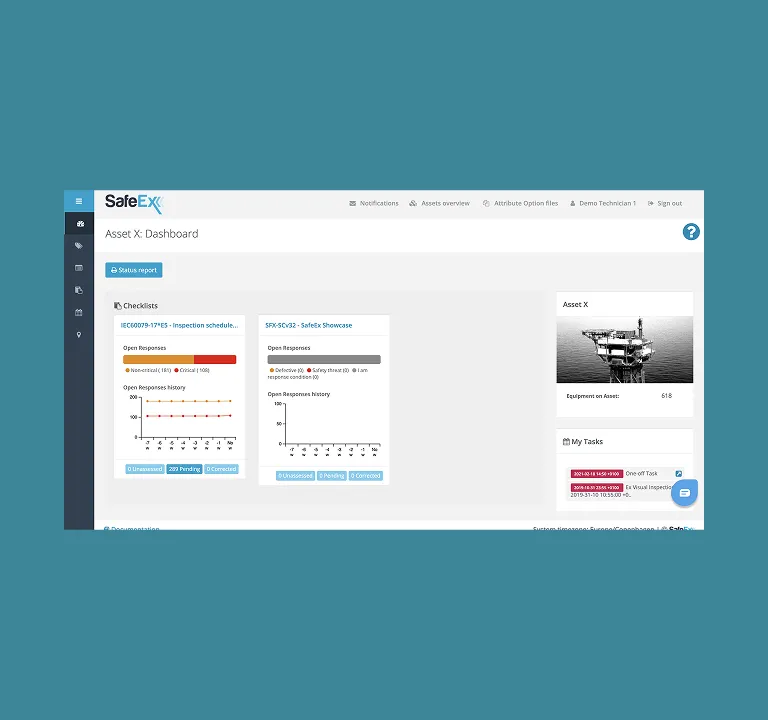
Thorough modernization of a complex mobile app for the world’s largest regional theme park company.


What impressed me most was DevOps' ability to quickly assess and lay out a plan for a path forward and that the development team didn’t work as a siloed one, but was proactive at reading app reviews and identifying gaps in user flows.



Customer satisfaction speaks for itself
Our expertise lies in striking the balance between high performance, impeccable mobile design, scalability, and cutting-edge innovation, whether through native or cross-platform solutions.
Expert advice for informed strategies


AI-augmented delivery with measurable impact
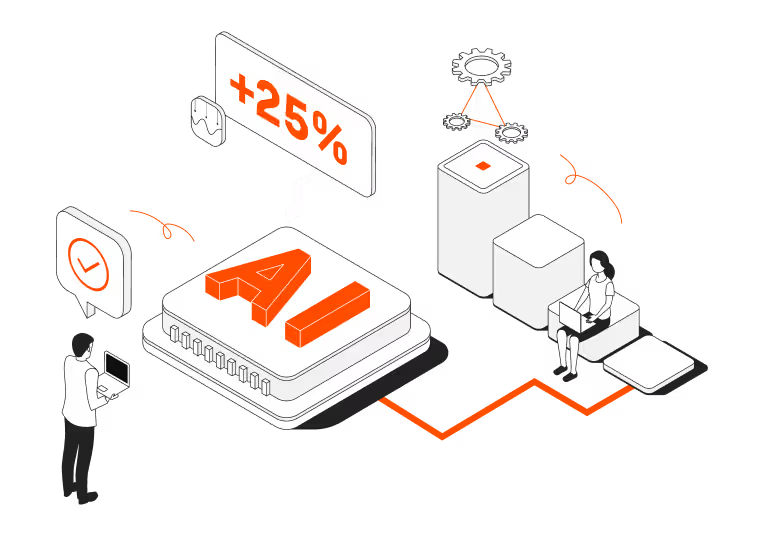
Our teams use AI across day-to-day delivery workflows, from coding and testing to analysis and documentation.
We track its impact through DORA metrics, and on selected tasks it can accelerate delivery by up to 25%.
Frequently asked questions
Cloud engineering services cover the design, implementation, and optimization of cloud infrastructure that supports your software products and business operations. This includes cloud architecture design, migration from on-premise or between cloud providers, infrastructure automation, cost optimization, security hardening, and ongoing cloud infrastructure management. At Merixstudio, cloud engineering is tightly integrated with our DevOps practice - we don't just set up servers, we build the automation, monitoring, and deployment pipelines that make your infrastructure reliable, scalable, and cost-efficient over time.
Our devops consulting services cover the full spectrum of development and operations optimization. This includes assessing your current infrastructure and delivery workflows, designing and implementing CI/CD pipelines, containerizing applications with Docker and Kubernetes, implementing Infrastructure as Code using Terraform, setting up monitoring and alerting stacks, optimizing cloud costs, and training your team on DevOps best practices. As a devops consulting company, we bring both strategic guidance and hands-on implementation - we don't just recommend changes, we build and configure them alongside your team.
Building an in-house DevOps team requires finding, hiring, and retaining specialized engineers - which is increasingly difficult and expensive given market demand. Devops as a service gives you immediate access to certified DevOps engineers with deep experience across AWS, Docker, Kubernetes, Terraform, and CI/CD tooling - without the overhead of full-time hiring. Our managed devops services model means we handle infrastructure setup, automation, monitoring, and optimization as an ongoing engagement, scaling up or down based on your needs. This is particularly valuable for mid-sized companies that need enterprise-grade infrastructure practices but can't justify a full in-house DevOps team, or for organizations that need to accelerate a specific initiative (migration, containerization, pipeline setup) with experienced engineers.
Yes - our cloud engineering and DevOps services are available as standalone engagements. Common scenarios include cloud audits and cost optimization for existing infrastructure, migration from on-premise to cloud or between providers, CI/CD pipeline setup and automation for your existing development team, Infrastructure as Code implementation for manually managed environments, and monitoring and alerting stack design. That said, many of our clients find the most value when DevOps is integrated with software development - because infrastructure decisions made without understanding the product often create problems down the line. Whether you need standalone DevOps support or infrastructure work as part of a broader product initiative, we adapt the engagement to your situation.
Our cloud migration consulting process starts with a thorough assessment of your current infrastructure - architecture, dependencies, data flows, security posture, and cost structure. Based on that assessment, we define a cloud migration strategy tailored to your situation: lift-and-shift for quick transitions with minimal code changes, refactor-and-migrate for applications that need architectural improvements alongside the move, or hybrid approaches that migrate in stages to minimize business disruption. We handle the actual migration - including data transfer, DNS cutover, testing, and validation - and set up the cloud infrastructure with proper automation, monitoring, and security from day one. Post-migration, we optimize for cost and performance to make sure you're not overpaying for resources you don't need.
Yes - both are core services. On premise to cloud migration enables businesses to move from physical infrastructure to scalable cloud environments, gaining flexibility, better disaster recovery, and potential cost savings. Cloud-to-cloud migration allows organizations to shift between providers - such as moving from Azure to AWS - for better pricing, improved capabilities, or alignment with technical strategy. Both migration types require careful planning around data transfer, application dependencies, downtime minimization, and security. As a cloud migration company, we manage the full process: assessment, planning, execution, validation, and post-migration optimization. We're an AWS Select Tier Services Partner, which means we bring certified expertise and access to AWS-specific tools and support throughout the migration.
Cloud cost optimization is one of the highest-ROI services we offer - most organizations overpay for cloud resources by 20–40% without realizing it. Our approach starts with a detailed analysis of your current cloud spending: usage patterns, idle resources, over-provisioned instances, and missed savings opportunities. From there, we implement concrete measures: right-sizing instances to match actual workloads, configuring auto-scaling to handle demand spikes without permanent over-provisioning, leveraging reserved instances or savings plans where predictable usage justifies commitment, cleaning up unused storage, snapshots, and orphaned resources, and setting up cost monitoring dashboards so you maintain visibility going forward. The goal isn't just to reduce this month's bill - it's to build cost awareness into how your infrastructure operates long-term.
As an AWS Select Tier Services Partner, we offer aws consulting services across the full infrastructure lifecycle. This includes architecture design and optimization for AWS environments, migration planning and execution (on-premise to AWS or other providers to AWS), cost optimization and resource right-sizing, security configuration and compliance assessment, CI/CD pipeline setup using AWS-native and third-party tools, container orchestration with Amazon ECS or Kubernetes on AWS, monitoring and alerting with CloudWatch and complementary tools, and Infrastructure as Code implementation using Terraform for AWS resources. Our aws devops services combine AWS-specific expertise with DevOps automation practices - so your infrastructure isn't just on AWS, it's automated, monitored, and optimized for how your team actually works.
Timelines depend on the scope and complexity of your environment. A focused migration of a single application to AWS can take 4-8 weeks. A broader migration involving multiple applications, databases, and integrations typically runs 2-4 months. Large-scale enterprise migrations with complex dependencies, compliance requirements, and multiple environments can take 6-12 months, usually delivered in phases to minimize business disruption. We always start with a cloud migration assessment that maps your full infrastructure landscape, identifies risks and dependencies, and produces a phased migration plan with realistic timelines - so you know what to expect before the migration begins.
If you're looking to hire devops engineers for a specific initiative or extend your existing team with infrastructure and automation expertise, we offer a team augmentation model that embeds experienced DevOps engineers directly into your organization. Our engineers bring certified expertise in AWS, Docker, Kubernetes, Terraform, GitLab CI, and monitoring tools like Prometheus and Grafana. We define collaboration patterns upfront so the augmented team operates as a seamless extension of yours. This model works well when you need to accelerate a specific project (migration, containerization, pipeline setup), fill a DevOps skill gap in your existing team, or scale infrastructure capabilities without the overhead and timeline of full-time hiring.
To begin a cloud engineering or DevOps engagement, we need a clear picture of your current infrastructure - existing cloud setup (or on-premise architecture if you're migrating), deployment processes, CI/CD tooling, monitoring setup, and any known pain points. Access to your cloud console (read-only for assessment) and existing documentation (architecture diagrams, runbooks, infrastructure configs) accelerates the assessment significantly. If you're seeking cost optimization, historical billing data is essential. The most important input is clarity on what's driving the need: slow deployments, scaling issues, rising cloud costs, security concerns, or an upcoming migration. The more context we have, the more actionable our recommendations will be.
When evaluating a cloud devops services provider, look for a team that combines infrastructure expertise with software development context. DevOps that's disconnected from the development process creates automation that doesn't match how your teams actually work. Ask whether they have certified engineers for your cloud provider (AWS, Azure, GCP), whether they implement Infrastructure as Code (not manual configuration), how they handle monitoring and incident response, and whether they can also support your development workflow - not just infrastructure. A good devops automation services partner measures success by delivery outcomes (deployment frequency, lead time, failure rate, recovery time - the DORA metrics) rather than just uptime. Check for security practices too - cloud infrastructure managed without proper security is a liability, not an asset.
Cloud migration security is a first-class concern throughout our process, not a post-migration afterthought. During migration, we implement encrypted data transfer, access controls, and network isolation to protect data in transit. After migration, we configure cloud-native security features: IAM policies with least-privilege access, VPC network segmentation, encryption at rest, security groups and firewall rules, and automated vulnerability scanning. We also integrate security into CI/CD pipelines using tools like Semgrep and Trivy, so that new deployments are continuously checked for vulnerabilities. Our work is backed by ISO 27001 and ISO 9001 certified processes - the same security and quality standards apply to our infrastructure work as to our software development.
Infrastructure as Code (IaC) means managing and provisioning your cloud infrastructure through code rather than manual configuration. Using tools like Terraform, every server, network rule, database, and deployment pipeline is defined in version-controlled configuration files. This matters because it eliminates manual setup errors (infrastructure is reproducible and consistent), enables fast environment provisioning (spin up a new environment in minutes, not days), provides an audit trail (every change is tracked in version control), and supports disaster recovery (rebuild infrastructure from code if something fails). Our terraform consulting expertise ensures your infrastructure is automated, documented, and maintainable - not dependent on one engineer who remembers how everything was configured.
Our kubernetes consulting services help organizations adopt, optimize, or troubleshoot container orchestration. This includes designing Kubernetes cluster architecture for your workloads, migrating applications from traditional deployment to containerized environments, optimizing resource allocation and auto-scaling policies, setting up monitoring, logging, and alerting for Kubernetes clusters, and implementing security best practices (RBAC, network policies, image scanning). Kubernetes is needed when your applications have grown beyond what simple Docker deployments can manage - when you need automated scaling, rolling updates, self-healing, and efficient resource utilization across multiple services. If you're running microservices or need to support multiple environments (development, staging, production) with consistency, Kubernetes typically pays for itself quickly in reduced operational overhead.
Yes - as part of our cloud engineering practice, we build and manage cloud infrastructure designed to support AI and machine learning workloads. This includes setting up infrastructure for LLM API integrations (OpenAI, Anthropic, and similar), deploying and managing vector databases (Pinecone, Weaviate, pgvector) for retrieval-augmented generation and semantic search, configuring model serving infrastructure for production AI workloads, and building AI-powered data pipelines that connect your models with existing systems and data sources. We also integrate AI directly into CI/CD workflows - including automated code review with AI, intelligent test generation, and predictive incident detection. This is a natural extension of our DevOps expertise: the same principles of automation, monitoring, and infrastructure-as-code that apply to traditional deployments apply to AI infrastructure - just with different tools and different scaling patterns.
We use DORA metrics - the industry-standard framework for measuring software delivery performance. The four key metrics are Deployment Frequency (how often you ship to production), Lead Time for Changes (how long from code commit to production deployment), Change Failure Rate (what percentage of deployments cause issues), and Mean Time to Recovery (how quickly you resolve incidents). We track these metrics across all our engagements and provide transparent dashboards so you have clear visibility into how your infrastructure and delivery workflows are performing. Our AI-augmented workflows - using tools like Cursor, Windsurf, and Claude - deliver measurable improvements across these metrics. Based on feedback from our engineering team, 47% report acceleration of 11–25% on key tasks, with another 14% reporting 26–50% improvements, which maps directly to Lead Time for Changes and Deployment Frequency.
Cloud engineering and DevOps involve significant configuration work - writing Terraform modules, configuring CI/CD pipelines, setting up monitoring rules, writing deployment scripts, and documenting infrastructure decisions. AI-augmented delivery accelerates these tasks by assisting with IaC template generation, pipeline configuration, and documentation - reducing repetitive work so engineers focus on architecture decisions and optimization strategies that are unique to your environment.
To keep AI output consistent with your infrastructure standards and security requirements, we follow Spec Driven Development: every infrastructure change starts with a validated specification before implementation. Engineers review all AI-generated configurations against the spec and test them in isolated environments before applying to production.
We measure the impact through DORA metrics, giving clients clear visibility into how AI supports faster delivery, fewer bugs, and shorter feedback loops. Based on feedback from our entire engineering team, AI can accelerate selected tasks such as code generation, debugging, refactoring, and test automation by up to 25%.
Every AI tool we use is vetted by our technical and legal teams and governed by clear internal security policies. In our latest internal survey, 94% of team members confirmed awareness of data security rules for AI usage, and no project data is ever used to train external models.
.svg)
.svg)
.svg)
.avif)

.avif)
.avif)
.avif)
