.svg)


.png)
Key Takeways
- Monoliths are not broken by default, but they can start limiting delivery speed, scalability, and team autonomy as organizations grow.
- Microservices bring the most value to large engineering teams working on complex products, while smaller teams often benefit more from a well-structured modular monolith.
- The hardest part of migration is rarely code extraction, but defining correct service boundaries and managing data consistency across services.
- Migration should be incremental rather than a full rewrite, so the system stays operational while changes are validated in production.
- Independent deployments are only possible when CI/CD, containerization, and observability are in place before the first service is extracted.
- Architecture changes rarely succeed without organizational change, as team structure ultimately shapes the resulting system design.
Monolithic vs. microservices architecture — key differences
A monolithic architecture keeps business logic, APIs, and data access in a single codebase, making development and maintenance simpler. For many products —especially those built by smaller teams — a modular monolith provides clear internal boundaries without the operational overhead of distributed systems.
But, as organizations grow, the limitations of a monolithic architecture can become more apparent. According to vFunction's research on architectural technical debt, organizations running monolithic applications are 2.1x more likely to experience challenges related to engineering velocity, scalability, and resiliency than those using microservices. While this doesn't mean every monolith should be migrated, it shows why many organizations eventually consider a microservices architecture.
Microservices split an application into independently deployable services aligned with business capabilities. They deliver the greatest value for complex products developed by larger engineering teams, where autonomous ownership and independent releases outweigh the added operational complexity.
Our experience shows that choosing between a monolith and microservices should be driven by real business needs. In our work with RP Group, we adopted microservices because the platform needed modular deployments, specialized hardware integration, and the flexibility to support different customer environments. Independent services enabled long-term scalability and easier product evolution.
When monolith still makes sense
If you don’t need independent scaling, separate deployments, or autonomous teams, microservices can add unnecessary complexity. A modular monolith with strong engineering practices is usually more effective than premature migration to distributed architecture.

Signs your monolith is ready for migration
A monolith is not something you replace by default. But there are clear signals that it may be limiting further growth and should be evaluated for decomposition.
- Multiple teams struggle to work independently in the same codebase. Coordination, merge conflicts, and shared ownership slow down delivery.
- Even small changes require cross-system coordination, long testing cycles, and complex deployments.
- It becomes difficult to evolve the system, isolate domains (e.g. billing, auth, reporting), or introduce new technologies where needed.
- Only parts of the system require high scalability, but the whole application must be scaled together, leading to inefficiency.
- The system naturally splits into clear domains that could be separated with relatively low coupling.
- Small updates carry high risk, affect multiple areas, and increase regression potential.
- Microservices only make sense if strong CI/CD, observability, and testing practices are already in place.

Benefits of migrating from monolith to microservices
When introduced for the right reasons, microservices can improve delivery speed, scalability, and operational efficiency:
- They enable faster releases by allowing teams to deploy services independently, without redeploying the entire system.
- They improve scalability, since only the parts of the system under load need to be scaled, which helps optimize infrastructure costs.
- They improve fault isolation, so failures in one service are less likely to impact the entire system.
- They can also increase technology flexibility, allowing different services to use the tools and frameworks that best fit their needs.
- They support team autonomy by aligning ownership with clear service boundaries.
Key challenges of monolith to microservices migration
A monolithic application to microservices migration is less about technology replacement and more about managing a series of structural trade-offs. These monolithic to microservices challenges explain why migration is rarely a pure engineering initiative.
How to prepare before the first service is extracted
In many systems, different components evolve at different speeds. When these differences translate into real constraints, separation may be beneficial.
Defining service boundaries with domain-driven design
The next step is defining service boundaries with Domain-Driven Design (DDD). Instead of organizing systems around technical layers, DDD focuses on bounded contexts, ensuring that each service aligns with a clear business capability. If you'd like a deeper introduction to DDD principles and their role in modernization projects, we cover them in more detail in our ebook, Modernize and Grow.
A common technique used in this phase is Event Storming, where engineers, product owners, and domain experts map business processes and identify natural seams in the system. At the same time, relying solely on workshops or whiteboard exercises can be misleading. That is why effective boundary definition typically combines DDD practices with static code analysis and runtime observation.
Building the infrastructure foundation first
Independent deployment is not achievable without a functioning CI/CD pipeline designed for multiple services, containerization through tools like Docker, and orchestration mechanisms such as Kubernetes.
Equally important are cross-cutting concerns that monoliths often handle implicitly. Service discovery, an API Gateway, centralized logging, and distributed tracing must be in place early, as they form the operational backbone of a microservices architecture. Without them, teams quickly lose visibility into system behavior and struggle to diagnose issues across service boundaries.
Monolith to microservices migration patterns
We often see organizations treating microservices as the goal rather than the solution. In practice, the most effective migration strategies are driven by specific requirements.
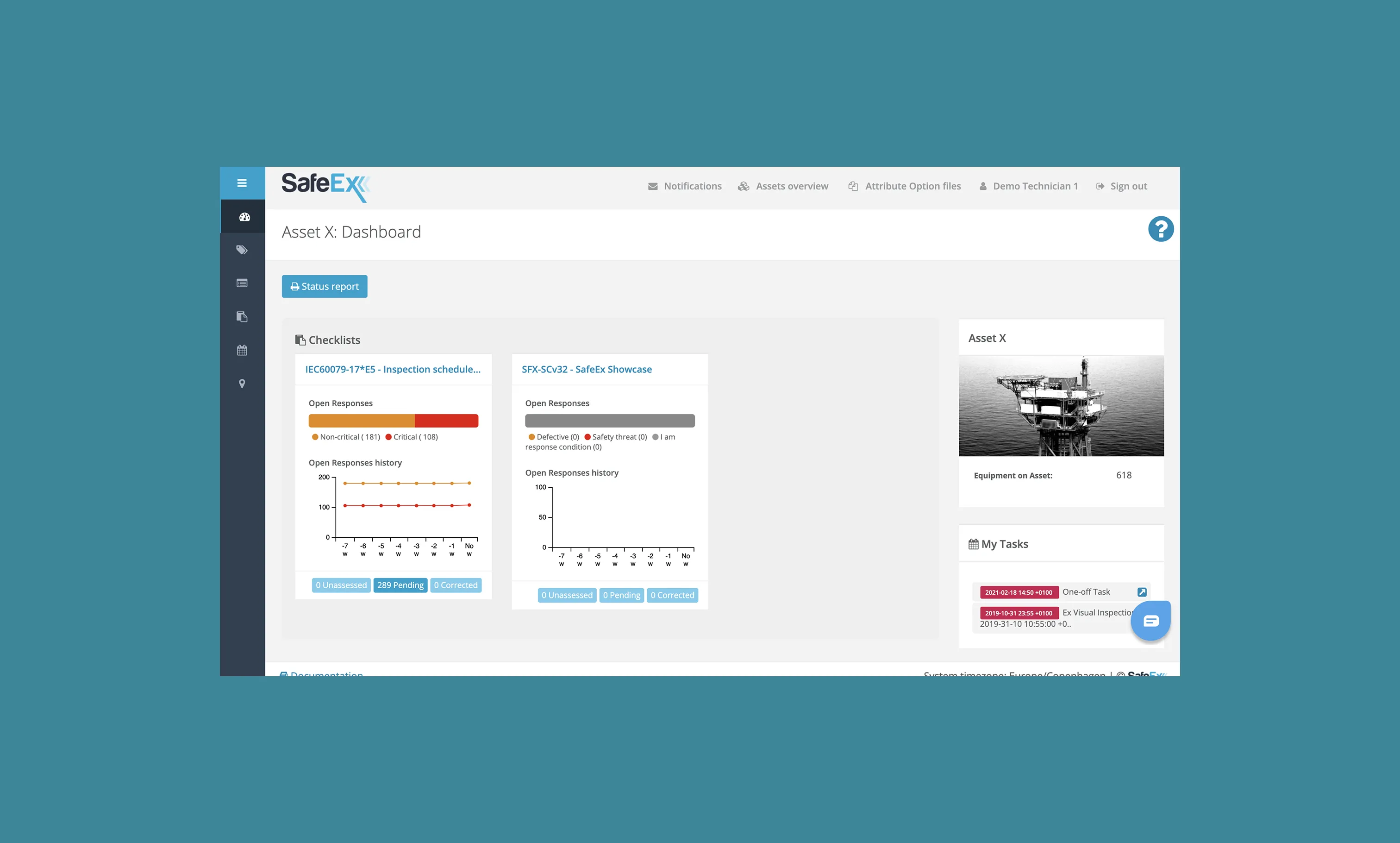
For example, when modernizing the SafeEx platform, we adopted a microservices architecture to ensure reliable system operation in remote environments with intermittent internet connectivity. Designed for users working on offshore drilling rigs, the solution delivers the resilience and stability required in challenging field conditions.
Strangler fig pattern
The Strangler Fig Pattern (introduced by Martin Fowler) is a well-established approach to incremental modernization. It works by placing an interception layer — often implemented as an API Gateway or reverse proxy — in front of the existing monolith. This layer gradually routes selected functionality to new microservices while the rest of the traffic continues to be handled by the legacy system.
Branch by abstraction
Branch by Abstraction operates at a lower level, directly within the monolithic codebase. Instead of routing requests externally, it introduces an abstraction layer around a specific capability, allowing two implementations — legacy and new — to coexist within the same codebase. This enables gradual replacement of internal logic without requiring system-wide changes or external routing mechanisms.
Parallel run pattern
The Parallel Run Pattern is used when correctness is critical and the risk of regression must be minimized. In this approach, both the monolith and the new microservice process the same requests simultaneously, but only the monolith’s response is returned to users. The microservice output is compared in the background to validate consistency and detect discrepancies.
Decorating collaborator pattern
The Decorating Collaborator Pattern introduces new functionality without modifying the monolith itself by wrapping or extending existing interfaces. A facade or decorator intercepts interactions, enhances or transforms data, and then passes it along to the original system or external consumer.
Data migration strategies
For teams moving from monolith to microservices, data management is often the most challenging aspect of the migration.
Database decomposition
Database migration starts with understanding how data is used across the system, since monoliths often share tables across modules with hidden dependencies. Without clear mapping, decomposition can break workflows. Teams usually begin with a shared database and strict ownership rules, then gradually move to service-specific stores as confidence and boundaries improve.
Managing distributed data consistency
When data is distributed across services, ACID transactions are replaced by eventual consistency, where updates propagate asynchronously. The Saga Pattern manages distributed workflows through sequences of local transactions with compensating actions on failure. Sagas can be choreography-based, with event-driven coordination, or orchestration-based, using a central controller to manage steps.

Event-driven architecture as migration enabler
Event-driven architecture supports safe data migration by using domain events to keep services loosely coupled while reflecting system changes in near real time. Message brokers like Kafka or RabbitMQ enable reliable communication between services. Event sourcing can further improve traceability by treating events as the system’s primary source of truth.
Step-by-step migration roadmap
Moving from a monolith to microservices should be done gradually, with validation at every stage.
- Start by extracting low-risk features like reporting, notifications, or batch jobs. This helps test deployment, monitoring, and service communication without high business risk.
- Introduce an API Gateway to route traffic and separate clients from internal changes. It becomes the main entry point for both the monolith and new services.
Prioritize what to extract based on business value, complexity, and dependencies. Start with areas that bring value but are easy to separate.
Simplify the monolith as you extract services, reducing coupling and clarifying internal structure over time.
Keep early services broad rather than too fine-grained. First define clear boundaries, then split further if needed.
Focus on stabilizing infrastructure, improving observability, and validating domain boundaries in production before increasing service granularity.

Testing strategy during migration
During a monolith to microservices migration, testing must support a hybrid environment where monolith and services run in parallel, ensuring consistent quality across both.
Unit and integration tests provide the foundation for stability. Contract testing (e.g., Pact or Spring Cloud Contract) reduces coupling by validating service interfaces without full end-to-end reliance.
Feature flags enable gradual rollout and safe rollback. In parallel-run phases, synthetic transactions validate key user flows, while comparative monitoring detects differences in behavior, performance, and correctness before full migration.
Organizational changes
A monolithic to microservices migration requires organizational change alongside technical work. Without it, teams risk recreating monolithic dependencies in a distributed system, as described by Conway’s Law, where architecture reflects communication structures.
Securing stakeholder alignment early in the process is just as important as making the right technical decisions — a topic we explore in more detail in our article on how to get stakeholders on board.
Organizations typically shift to cross-functional teams with end-to-end ownership of services (“you build it, you run it”), improving accountability and reducing handoffs.
Governance also becomes more lightweight, focusing on shared standards for APIs, observability, and communication, often documented through Architecture Decision Records (ADRs), enabling autonomy without losing consistency.
Planning a monolith to microservices migration?
A monolith to microservices migration is an iterative process that requires continuous validation, solid infrastructure, and organizational readiness. Success depends on careful sequencing of changes, disciplined service boundary design, and the ability to evolve both architecture and teams in parallel rather than in isolation.
At Merixstudio, we support organizations through complex software modernization services, from early assessment to full-scale distributed architectures. If you're planning a migration or evaluating your current system, we can help you define a safe path forward.
FAQ
The Strangler Fig Pattern is an incremental migration approach where new functionality is built alongside a monolith and traffic is gradually routed to it via an API gateway or proxy until the legacy system is fully replaced.
There is no fixed timeline. In practice, a monolith to microservices migration can take months or years depending on system complexity, team structure, and how aggressively services are extracted.
In most cases, a rewrite is significantly riskier. Incremental migration is preferred because it allows systems to remain operational while changes are validated in production.
The hardest part is usually not code extraction, but defining correct service boundaries and managing distributed data consistency across services.
Database migration is typically incremental, starting with shared databases and gradually moving toward service-owned data stores, while introducing patterns like event-driven synchronization.
Domain-Driven Design (DDD) helps define service boundaries based on business capabilities rather than technical layers, reducing coupling and improving long-term system clarity.
Service boundaries are defined using business domains, often validated through techniques like Event Storming and refined through real-world dependency analysis.
The Strangler Fig Pattern operates at the routing level, gradually redirecting traffic to new services, while Branch by Abstraction works inside the codebase by introducing abstraction layers to replace implementations incrementally.
A monolith is often preferable for early-stage products, small teams, or systems with limited domain complexity where distributed system overhead would outweigh benefits.
CI/CD evolves from a single pipeline to multiple independent pipelines per service, enabling separate deployments, faster release cycles, and more granular rollback strategies.

Paweł Hałabuda
Content Writer
An IT industry writer with 10 years of professional experience creating content on software development, software architecture, and digital transformation. He specializes in translating technical concepts into clear, practical insights for engineering teams and decision-makers. Over the past decade, he has worked closely with software engineers, architects, and product leaders to produce articles, case studies, and thought leadership content grounded in real-world engineering practice.
view more posts by Paweł Hałabuda

Miłosz Kusiciel
Head of Technology
Head of Technology at Merixstudio with over 17 years of experience in software development and tracking emerging trends. He defines and executes Merixstudio's technology strategy, ensuring solutions are scalable, secure, and aligned with real business goals rather than technology for its own sake. In recent years, he has led the responsible adoption of AI within the company and played a crucial role in achieving ISO 9001 and ISO 27001 certifications - a concrete signal of his commitment to engineering quality and information security standards. Miłosz is an active member of ITCorner and Poznan City Lab, and a regular speaker at tech events like Pozitive Technologies and Tech of Tomorrow.
view more posts by Miłosz Kusiciel
.png)


.svg)
.svg)
.svg)
.avif)

.avif)
.avif)
.avif)
