


.svg)


Our team of dedicated business analysts will come
back to you soon!
AI-augmented software delivery
AI built into every stage of development - with a structured methodology, live delivery metrics, and engineers who stay in control. You see the impact on your project, not just the promise.





+176%
Deployment frequency
-69%
Lead time for changes
-61%
Change failure rate
-75%
Mean time to restore
-71%
PR Cycle Time
-67%
PR Revert Rate
Source: CI/CD telemetry - live engagement data - anonymized project
DORA metrics track delivery performance across the engagement. We also monitor PR Cycle Time and PR Revert Rate - metrics that more directly reflect how AI is affecting code speed and the quality of what ships.
What changes when AI is built into your delivery
With AI-augmented delivery
Governed
Traceable
Predictable
AI used ad hoc
AI built into a shared process
Every engineer works from the same methodology - Spec Driven Development, approved tools, clear checkpoints at every stage.
Code generated, not reviewed
Code owned and verified
AI assists not churns out output. Engineers own the delivery. Every generated output is reviewed against the spec before it moves forward.
No visibility into impact
Delivery measured from day 1
DORA metrics tracked continuously. You see deployment frequency, lead time, failure rate - on your project, live.
What you get
01
Faster delivery, documented
DORA metrics, PR Cycle Time, and PR Revert Rate show where AI reduces lead time and deployment friction - on your project, not industry averages.
02
Code quality that holds
Every AI output reviewed against the spec. No black-box merges, no invisible debt accumulating in the background.
03
A process your engineers own
AI assists at every stage. Your team stays in control and understands what's been built - and why.
04
Proof you can show internally
Live metrics give you something concrete when stakeholders ask whether AI is actually working on your project.
Delivery intelligence you can actually see
Most delivery metrics are summaries. Ours are live.
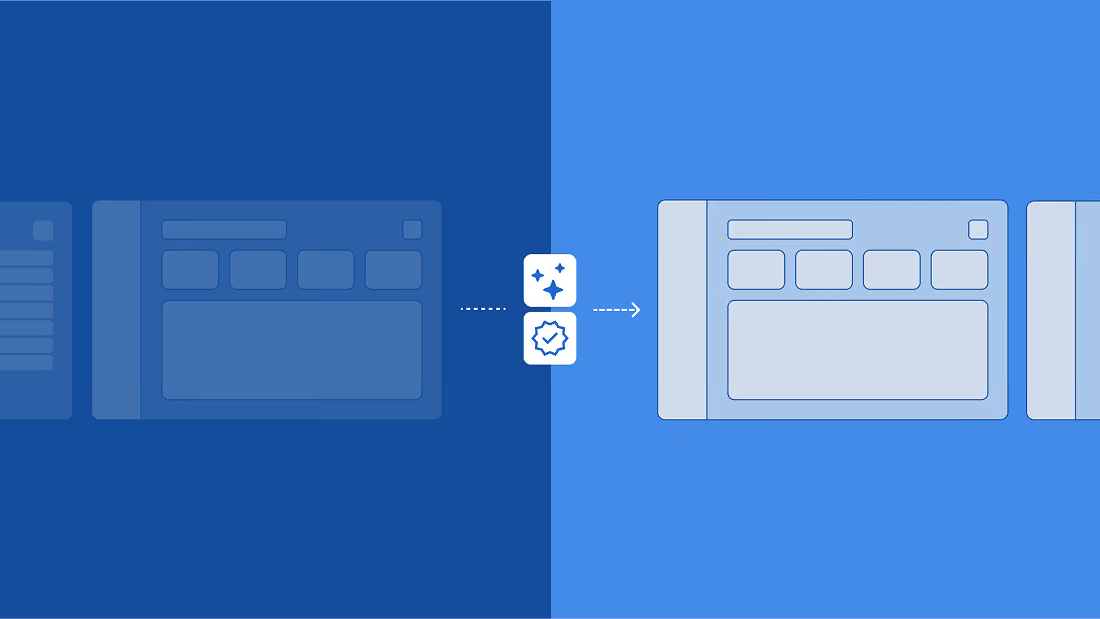
The Merixstudio Delivery Intelligence Dashboard tracks six metrics: four DORA indicators, plus PR Cycle Time and PR Revert Rate - giving you visibility into both delivery performance and the engineering workflow behind it. You see whether AI is helping teams move faster without making the process more fragile.
Engineers track these continuously. Every check-in and milestone review gives you a clear, current view of what's actually happening in delivery - not what happened last quarter.
How to read the dashboard - 5-minute video guide
A 5-minute walkthrough of every metric we track - what it measures, why it matters, and what changes when AI becomes part of the delivery process.
Where AI makes sense
We work best with teams that want to bring AI into products and delivery in a way that is useful, measured, and grounded in real needs.
CHALLENGE 01
AI is used, but nothing's measurable
Teams adopt AI tools, but no one knows if it's making delivery faster - or creating new risk. No shared metric, no baseline, no way to report up.
CHALLENGE 02
Generated code that looks right but breaks in production
AI writes code faster than engineers can review it. Quality drops. Rework increases. Technical debt accumulates in ways that are hard to see until it's too late.
CHALLENGE 03
Timelines are still unpredictable
AI was supposed to speed things up. But delivery dates keep slipping. It's unclear whether AI is helping or just adding a new layer of complexity.
CHALLENGE 04
Security and data policy with AI tools is unclear
The team uses AI, but nobody's sure what data leaves the environment or whether the tools are compliant with client agreements and ISO requirements.
CHALLENGE 05
A previous partner promised AI and didn't deliver
You went down the road with a dev shop that led with AI capabilities. The product never went live. Now you need reliability and a real process - not promises.
CHALLENGE 06
No visibility into what the team is doing with AI
Engineers use AI tools daily, but there's no way to see the impact. You're paying for delivery - but you can't tell how much AI is helping or where it's introducing risk.
AI-augmented delivery in practice

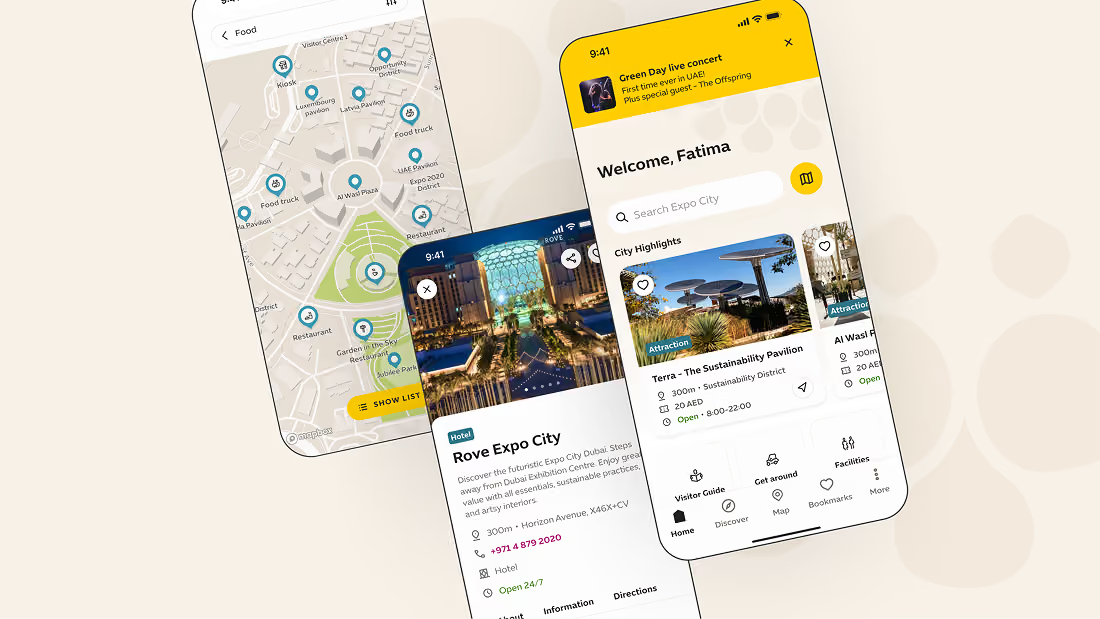
Building an AI-powered monitoring platform for a public venue - from sensors to operational intelligence
A multi-use event venue where operational decisions - staffing, cleaning schedules, HVAC settings, catering hours - were made on experience and estimates, not data. No reliable, continuous source of information on how many people were in the space, where, and when.
We built three AI layers on top of a sensor infrastructure spanning 24 sensors across 6 columns in a 22-metre glazed hall. A custom-trained LiDAR model for anonymous people counting - off-the-shelf models failed in this space, so we trained on real crowd scenarios specific to this venue: groups entering side by side, baggage, pushchairs, stops at stands. A predictive model trained on 12 months of continuous data, forecasting footfall by day and hour across the full event calendar. And a conversational AI interface that lets operations staff ask questions in plain language and get data-backed answers in real time - no analysts, no BI tools, no waiting for a report.
The shift: from reacting to what already happened, to planning for what's about to.
Custom AI model • Backend migration
Explore more AI-augmented projects
01
Discovery & Requirements
We define what we're building before writing a line of code. Business requirements, user needs, technical constraints - documented and agreed before any implementation begins.
AI role: spec drafting, ADR generation, PoC validation
Artifact: spec doc, ADRs
02
Specification & Design
The spec becomes the source of truth. Architecture decisions recorded as ADRs - not just "what", but "why this approach". Proof of concept for critical components before full implementation.
AI role: spec drafting, ADR generation, PoC validation
Artifact: spec doc, ADRs
03
Task Decomposition
The spec is broken into granular, reviewable tasks. Each task maps to a requirement. Nothing falls through the cracks between planning and delivery.
AI role: task breakdown generation
Artifact: task list with acceptance criteria
04
AI-Augmented Implementation
Engineers use AI to generate, complete, and review code - always against the spec. Human oversight at every step. No black-box outputs shipped without engineer review.
AI role: code generation, completion, review
Tools: Cursor, Copilot, Claude, Windsurf
05
QA Against Spec
Tests map to requirements from day one. QA validates against the original spec - not just "does it run", but "does it do what we said it would". AI-generated code goes through the same security scanning as everything else: Semgrep and Trivy in CI/CD.
AI role: spec audit for gaps, contradictions, and edge ca
Artifact: traceability matrix / coverage report + verify report
06
Delivery & Measurement
DORA metrics, PR Cycle Time, and PR Revert Rate tracked continuously. You see deployment frequency, lead time, failure rate, and code quality signals - on your project, updated in real time. Not a report at the end. A live view throughout.
Output: live delivery dashboard
Artifact: DORA metrics + PR metrics report per sprint
Internal AI Adoption Study: Measuring the Maturity of AI-Augmented Engineering Delivery
>25%+
average productivity boost across development tasks
94%
active daily adoption of AI tools across the engineering team
100%
team advocacy to AI-driven workflow
Our AI-enhanced workflow helps teams reduce friction and work more efficiently across the entire software delivery lifecycle. From code generation, testing, documentation, and debugging to meeting summaries, document analysis, and client deliverables, AI is embedded in day-to-day delivery wherever it creates measurable value. Our engineers don't just write code - they orchestrate AI-assisted development workflows. We measure the impact through DORA metrics, PR Cycle Time, and PR Revert Rate - giving clients a complete picture of how AI is affecting both delivery speed and the quality of what ships.
Internal survey - N=81 engineers - no project data used to train external models
Why Merixstudio
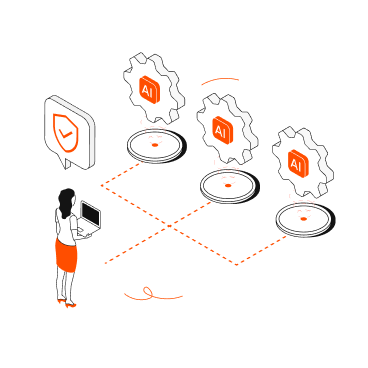
Multi-model - no vendor lock-in
We use Claude, Cursor, Copilot, Gemini, Windsurf - whichever fits the task. Not a reseller of any single tool. Our engineers choose; no partnership agreement chooses for them.
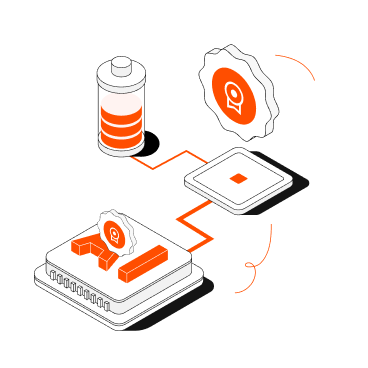
Governed AI - policy, ISO, security scanning
Every tool vetted before team use. AI-generated code goes through Semgrep and Trivy in CI/CD - same checks as everything else. ISO 27001 & ISO 9001 certified processes.
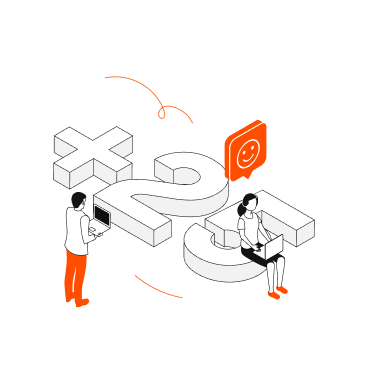
25+ years, ~100 mid/senior engineers
Mid-size and enterprise projects across Europe, the Middle East and the US. AI delivery run by engineers who've shipped production software for decades - not prompt engineers.
Measured on every engagement
DORA metrics, PR Cycle Time, and PR Revert Rate - tracked from day one, not summarized at the end. You see what's changing - sprint by sprint.
Tools our teams use:
.webp)
.webp)
.webp)
.webp)



We don't lock into one vendor. Different tools for different tasks - always governed by our internal security policy.
Oops! Something went wrong while submitting the form.
Frequently asked questions about AI-augmented delivery
AI-augmented software delivery means integrating AI tools into the full development process in a structured, governed way - not ad hoc. Engineers use AI to generate, review, and test code at every stage, but every output is validated by a human against a written specification. The result is faster delivery without losing control of quality, predictability, or security. We measure the impact through DORA metrics, PR Cycle Time, and PR Revert Rate - tracking both delivery performance and the quality of AI-assisted code.
Most teams use AI tools individually, without a shared process or any way to measure the impact. We start every project with a written specification, decompose it into tasks with acceptance criteria, and track delivery metrics in real time. AI assists at every stage - but the spec, not the AI output, is the source of truth. Engineers review and own every generated output. The difference isn't the tool. It's the process, the oversight, and the measurement.
Spec-driven development is an approach where every project begins with a structured specification - requirements, architecture decisions, task breakdown - before any code is written or generated. The spec becomes the source of truth that AI works against, not in spite of. It's what makes AI-augmented development predictable: instead of generating code into a void, engineers generate code against a clear, agreed definition of what needs to be built. On one project, the specification ran to nearly 100,000 lines of Markdown before the first line of code was generated. The implementation that followed completed faster than the original scope assumed - without the rework that migrations like this usually require.
We track DORA metrics - deployment frequency, lead time for changes, change failure rate, and mean time to restore - alongside PR Cycle Time and PR Revert Rate, which more directly reflect AI's impact on code speed and quality. You get a live dashboard with your project's data, updated in real time. Not benchmark averages, not a summary at project close. A live view, sprint by sprint, that shows exactly what's changing as AI becomes part of the delivery process.
We apply AI at every stage of the development lifecycle - not just coding. During discovery, AI helps map requirements and identify gaps in the spec. During specification and design, AI generates architecture decision records and validates proof-of-concept approaches. During implementation, engineers use AI for code generation, debugging, and refactoring - always against the written spec. During QA, AI assists with test generation and regression coverage. Throughout delivery, AI supports documentation and analysis. Every tool is vetted for security, and no AI output ships without engineer review.
Human-in-the-loop means engineers stay in control at every stage where AI is involved. AI can generate, suggest, and accelerate - but humans define the spec, review every output, and make the architectural decisions. We don't automate away engineering judgment. We use AI to reduce repetitive work so engineers can focus on the parts that require experience and domain understanding.
Every AI tool used by our teams is vetted for data privacy and security before it's approved for use. We maintain a formal approved-tools policy aligned with ISO 27001 and ISO 9001 standards. AI-generated code goes through the same security scanning as everything else - Semgrep for static analysis, Trivy for container and dependency scanning - integrated into the CI/CD pipeline on every push. No project data is used to train external models. In our latest internal survey, 94% of engineers confirmed awareness of our AI data security policy.
We hear this often. The pattern is usually the same: a partner led with AI capabilities, built something that couldn't go live, and left the client with lost time and a broken process to fix. We take the opposite approach - we start with the spec and the process, not the technology. You see the methodology before we write a line of code. You see the metrics as we build. And you see the actual output, not a pitch deck. If you've been burned before, this is exactly what the 30-minute call with our engineers is for: we walk you through the process and show you what the dashboard looks like on a real project.
.svg)
.svg)
.svg)
.avif)

.avif)
.avif)
.avif)
