.svg)



Key Takeaways
- In practical terms, the enterprise software meaning is defined by a system's ability to manage cross-departmental data flow and automate complex organizational workflows, not simply by having a high volume of active users.
- Enterprise software is a massive structural pillar of the modern economy, with conservative market research projections pointing to a minimum 7.8% to 12.8% compound annual growth rate through 2033.
- Enterprise Resource Planning (ERP) remains the single largest software segment, commanding approximately 23.2% of the total global enterprise software market.
- While, according to BetterCloud (The 2023 State of SaaSOps report), cloud-based enterprise adoption now exceeds 71%, the ease of cloud deployment has created a new problem: the average organization now struggles to handle between 106 and 112 disparate SaaS applications, with large enterprises managing well over 150.
- Organizations typically transition to custom development when rigid off-the-shelf platforms complicate enterprise software management, forcing teams into inefficient workflows and creating structural liabilities rather than supporting operational growth.
True enterprise-grade systems require elastic scalability, zero-trust security architecture, regulatory compliance (e.g., GDPR and SOC 2), absolute interoperability through robust APIs, and bespoke, role-based data dashboards.
What is enterprise application software? EAS is mission-critical software built to serve an entire organization rather than individual users. Acting as a centralized system of record, it unifies cross-departmental data, enforces regulatory compliance, and automates complex business workflows. It’s something single-user tools can't do.
What is enterprise software?
To answer the fundamental question “what is enterprise software” we must define it by its scope: it is a robust, centralized software architecture designed to serve the collective operational needs of an entire organization rather than the isolated needs of individual users.
Often referred to as enterprise application software, this technology acts as the central nervous system for corporate operations. Its primary mandate is the automation of complex business processes and the centralized management of large, interdependent datasets.
Unlike single-purpose desktop applications, true business software systems operate on a macro level. Their core functionalities include:
- Unifying data: Bridging isolated departmental silos into a single source of truth.
- Automating workflows: Triggering cross-departmental actions without human intervention.
- Managing scale: Processing massive volumes of data simultaneously without performance degradation.
Ultimately, understanding the enterprise software requires looking at its business output. These systems are not just tools; they are strategic assets designed to enforce strict compliance standards, eliminate operational redundancy, and transform raw data into real-time executive intelligence.
.avif)
Enterprise software vs. individual software: Key differences
The fundamental difference between corporate applications and consumer software lies in their design philosophy: consumer software optimizes for individual user experience, while enterprise software optimizes for organizational data flow and systemic governance.
When evaluating these tools, IT leaders must look beyond the user interface. Consumer or team-level tools are built to solve isolated problems (e.g., individual task management or personal cloud storage) with minimal setup. Conversely, corporate software solutions are built to support complex, multi-layered workflows where a single action in one department triggers automatic financial, legal, and operational compliance updates across the entire enterprise.
Consumer vs. Enterprise Software: Core Architectural Differences
Why is enterprise software critical for modern business?
Modern enterprises cannot scale efficiently without centralized software because fragmented data directly erodes profit margins. Implementing comprehensive business software systems eliminates operational blind spots, breaks down data silos, and delivers real-time executive visibility.
When departments use disparate, disconnected tools, data fragmentation naturally follows. The financial impact of manual data reconciliation, human error, and delayed decision-making can be staggering. Enterprise-level applications mitigate these risks by serving as a unified system of record, allowing executives to make high-impact strategic decisions based on live, verified analytics rather than historical guesswork.

Strategic business advantages include:
- Total operational transparency: Executives gain a macro-level view of company performance, from supply chain efficiency to real-time sales pipelines.
- Reduced operational overhead: Automating repetitive, cross-functional tasks minimizes manual labor costs and accelerates time-to-market.
- Optimized risk management: Centralized governance guarantees that data security and regulatory compliance are programmatically enforced across all business units.
This is no longer a technology that large companies simply choose to adopt; it is a structural pillar they cannot operate without. According to a 2025 report by SNS Insider, over 68% of large enterprises are currently investing in integrated corporate systems to replace fragmented tools. The broader trajectory reflects this necessity: according to a 2025 report by Grand View Research, the global enterprise software market is projected to surge from roughly $291.75 billion to an estimated $750 billion by 2033, driven entirely by the need for operational unification.
Real-World Impact: See how replacing cumbersome Excel spreadsheets with a custom enterprise sales tool allowed Boston Solar to accelerate their sales cycle by 33% and save 200+ hours annually.

Most common types of enterprise software
The modern corporate ecosystem relies on various specialized types of enterprise software, each engineered to govern a distinct operational domain while feeding data back into the central corporate database.
To maintain structural integrity, these systems must not operate as isolated islands. Whether managing customer lifecycles, global logistics, or financial forecasting, these platforms must communicate flawlessly to ensure data consistency across the enterprise.
Enterprise resource planning (ERP)
ERP systems serve as the definitive operational ledger of an enterprise. They centralize core business data across finance, human resources, manufacturing, procurement, and logistics, ensuring that a financial transaction instantly reflects in inventory metrics and supply chain forecasts.
Content management system (CMS)
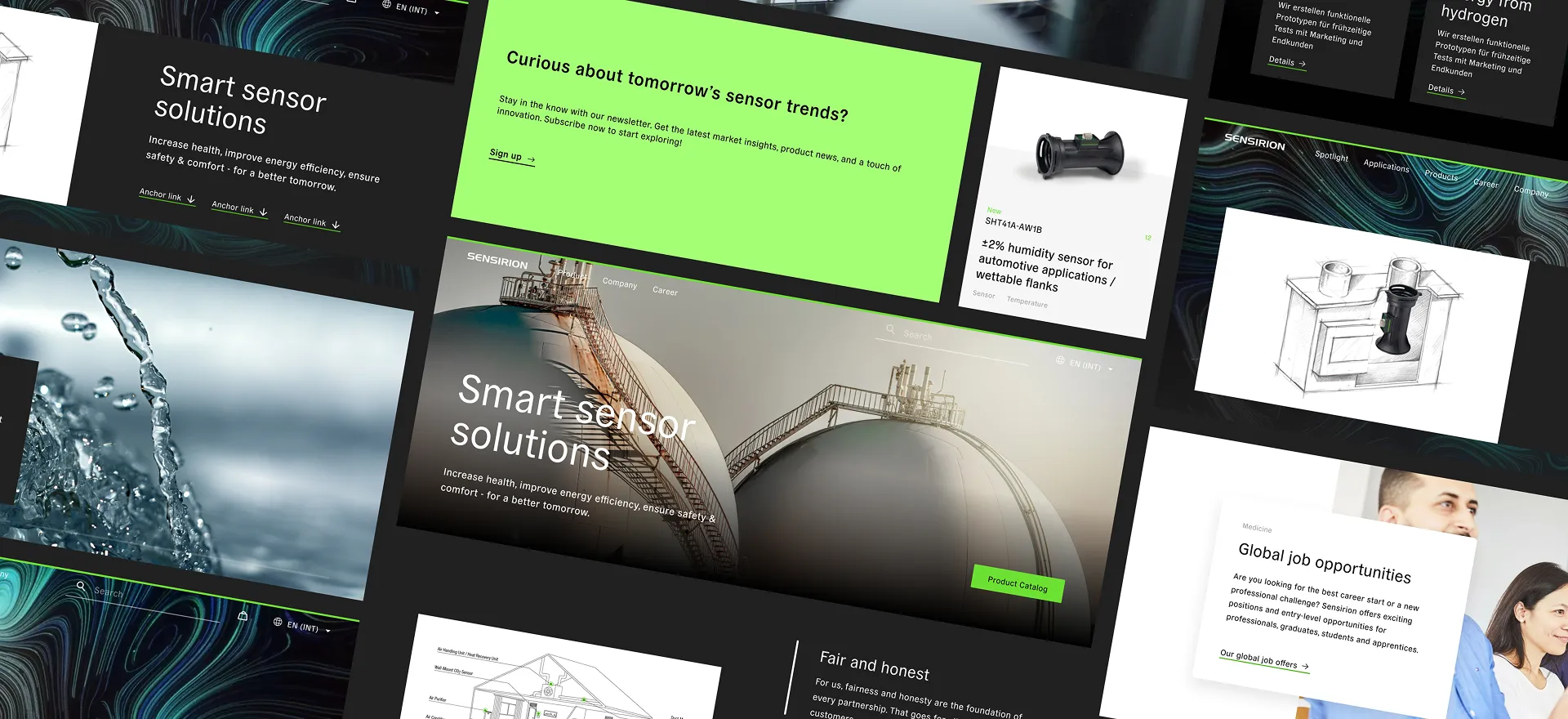
An enterprise-grade CMS controls the creation, governance, and distribution of digital content across global, multi-lingual digital touchpoints. Unlike basic blogging tools, an enterprise CMS integrates with localized translation pipelines, legal compliance workflows, and omni-channel delivery architectures, a challenge we solved when engineering an enterprise-level content management platform for Sensirion.
Customer relationship management (CRM)
CRM platforms manage the entire lifecycle of customer interactions. By centralizing sales pipelines, customer support tickets, and marketing automation data, a CRM ensures that account managers, support agents, and executives have a unified, 360-degree view of every client account.
Supply chain management (SCM)
SCM software optimizes the flow of goods, data, and finances from raw material procurement to final customer delivery. These platforms leverage real-time telemetry and data analytics to minimize warehouse overhead, predict shipping delays, and optimize multi-tiered logistics networks.
Human resource management (HRM)
HRM platforms automate complex talent management, global payroll processing, and regulatory compliance. They handle everything from automated onboarding workflows to complex regional tax calculations, shielding the organization from legal and operational liabilities.
Key features of modern enterprise systems
An application is not classified as "enterprise-grade" simply because of its price tag. If you are asking what enterprise software is from an engineering perspective, it must possess specific structural attributes that guarantee resilience, security, and elasticity under extreme operational loads.
Enterprise-Grade Architecture
- Scalable Cloud Architecture
(Cloud Native • Microservices • Containers) - DevOps & CI/CD Automation
(Continuous Integration & Deployment) - Zero-Trust Security & Compliance
(IAM • MFA • RBAC • GDPR • SOC 2) - API-First Interoperability
(APIs • Legacy Integration • Third-Party Services) - Elastic Scalability
(Horizontal & Vertical Scaling) - Role-Based User Experience
(Dashboards • Real-Time Analytics)
When custom software engineers architect enterprise systems, they prioritize six non-negotiable architectural pillars:
- Elastic scalability: The system must automatically scale resources up or down in response to changing workloads. By dynamically adjusting compute, memory, and storage capacity, it maintains consistent performance during demand spikes while optimizing resource utilization during periods of lower activity.
- Scalable architecture and cloud infrastructure: Beyond runtime behavior, the foundation of enterprise systems must be built for modularity and long-term adaptability. Cloud-native design principles, such as microservices, containerization, and distributed environments, ensure that individual components can be deployed, updated, and scaled independently, without introducing systemic risk or requiring full-system redeployment.
- Streamlined deployment operations: Enterprise software management systems rely on mature DevOps practices and automated CI/CD (Continuous Integration and Continuous Deployment) pipelines. These capabilities enable frequent, reliable releases, allowing engineering teams to deploy new features, security patches, and architectural updates with minimal disruption to business operations.
- Advanced security & compliance: Enterprise software must implement a zero-trust security model. This includes multi-factor authentication (MFA), role-based access control (RBAC), encryption of data in transit and at rest, and comprehensive audit logging to support regulatory compliance. These capabilities are essential when modernizing enterprise applications for highly regulated industries such as insurance.
- Absolute interoperability: Modern enterprise systems must feature highly robust API layers capable of facilitating frictionless data exchanges with both modern third-party platforms and deeply entrenched legacy systems.
- Data-rich, role-based user interfaces: A successful enterprise application must distill massive, highly complex datasets into clean, intuitive, and high-performance interfaces tailored to specific user roles, from warehouse operators to C-level executives.
Enterprise software vs. SaaS: Clearing the confusion
Software as a Service (SaaS) is a delivery and licensing model, whereas enterprise software is a functional category defined by its operational scope. An enterprise system can be delivered via SaaS, deployed on-premise, or engineered as a proprietary custom solution.
The confusion typically stems from market overlap. According to Mordor Intelligence (2026-2031 growth trends and forecast), industry estimates, the SaaS market reached approximately $390 billion and is on track to power 85% of all business software. However, the ease of cloud deployment has created severe operational fragmentation.
According to a 2025 data compilation by Zylo, Backlinko, and SellersCommerce, the average company now juggles between 106 and 112 disparate SaaS applications, with large enterprises managing well over 150 tools.
Standard commercial applications frequently fail because they trap data inside these isolated silos. When off-the-shelf platforms cannot accommodate deeply specialized legacy system integration, organizations are forced to consolidate this sprawl through custom enterprise architecture.
For instance, highly specialized organizations frequently operate with proprietary workflows that standard SaaS platforms simply cannot accommodate. When off-the-shelf software failed to handle the complex, multi-stage performance scheduling at The Juilliard School, we engineered a bespoke registration management system to replace their fragmented tools.
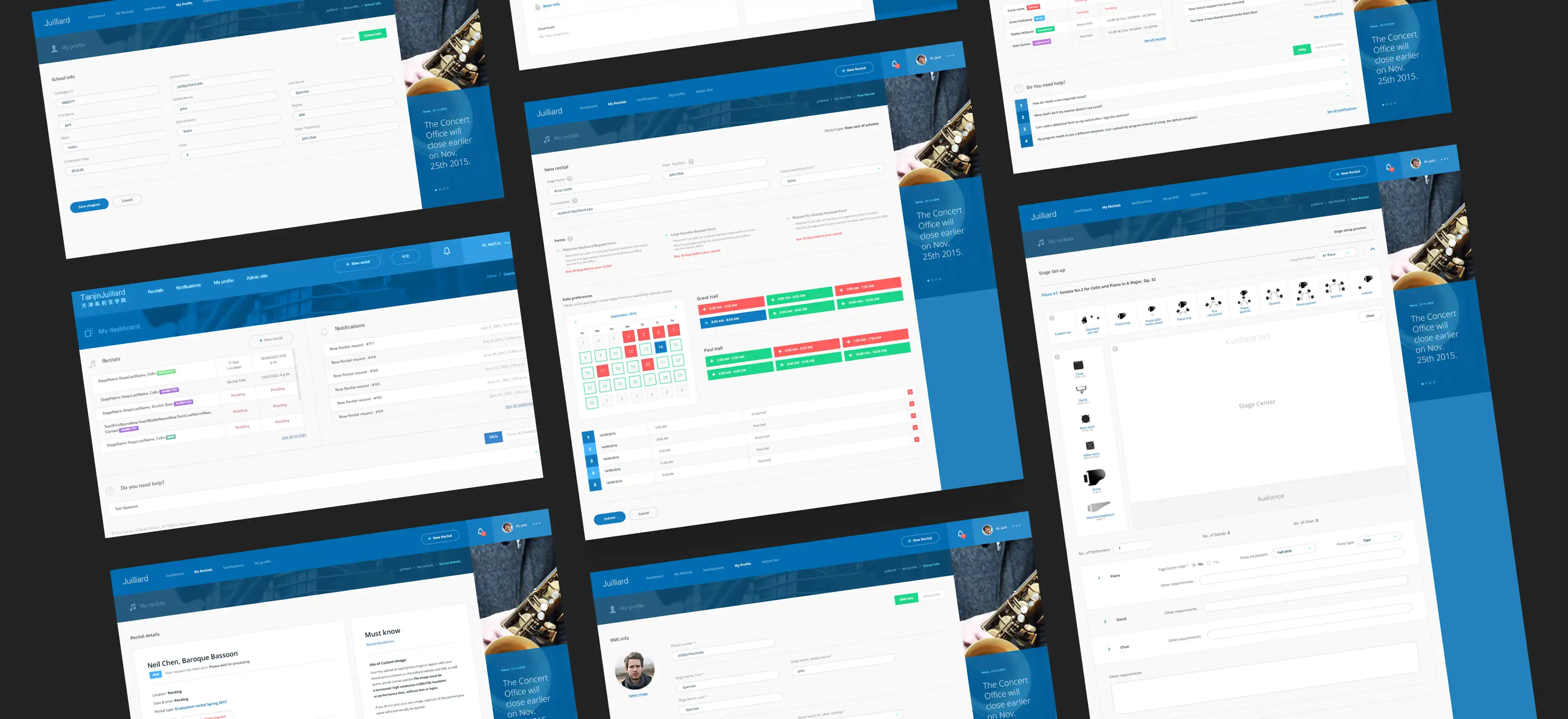
By mapping the software exactly to their operational reality, we automated their core administrative workflows and eliminated manual data entry bottlenecks.
Because the system was built on a scalable, enterprise-grade architecture rather than a rigid vendor template, Juilliard was able to roll the platform out to their newly established Chinese branch. This structural alignment between their business operations and the custom software drove a 25% increase in ticket sales.
The SaaS Sprawl Paradox Cloud apps are fast to deploy but easy to over-adopt. Per 2025 data from Zylo, Backlinko, and SellersCommerce, the average enterprise runs 106–112 disconnected applications. True enterprise software management requires consolidating this fragmentation through robust API layers and custom core architectures to eliminate manual data reconciliation.
Enterprise Software: Delivery & Deployment Models
When standard off-the-shelf platforms fall short, organizations turn to custom enterprise software development services. Building a bespoke system grants total ownership of the source code, eliminates recurring per-user licensing fees, and ensures that the software conforms perfectly to the business model, rather than forcing the business to alter its operations to fit a rigid vendor template.
Real-world examples of enterprise software
To understand how these massive systems function globally, we can analyze the market-leading platforms that power the operations of Fortune 500 companies every day.
These platforms have become industry standards due to their immense operational depth and their capacity to manage global-scale business data.
To understand how these massive systems function globally, we can analyze the market-leading platforms. According to a 2025 report by Global Growth Insights, nearly 81% of U.S. enterprises now run multi-functional platforms to govern their core operations.
- SAP S/4HANA (ERP): According to a 2025 report by Grand View Research, ERP remains the largest single software segment, holding 23.2% of the market. SAP continues to dominate this space; according to their 2024 financial disclosures, the company generated around $36,76 billion in revenue by running the core manufacturing and HR operations of thousands of multinationals.
- Salesforce Customer 360 (CRM): A massive platform that centralizes global sales, service, and marketing data. While recent IDC data shows Salesforce and SAP statistically tied as the world's top enterprise applications software companies, Salesforce maintains undisputed dominance specifically in the CRM segment. In 2024, its CRM revenue exceeded $21.6 billion, surpassing its four closest competitors combined.
- Workday: The go-to platform for unified HR and financial management. To grasp the sheer scale of enterprise data fueling its AI capabilities, consider that the Workday platform reportedly processes over 800 billion transactions annually.
- ServiceNow: Acting as the "control tower" for corporate workflows, this platform is a primary example of centralized enterprise software management. It sits on top of existing data structures (like SAP or Salesforce) to automate IT service delivery, orchestrate processes, and enforce cross-departmental security.
.webp)
The future of enterprise application software
The future of corporate technology lies in the shift from passive data collection to proactive, autonomous decision execution, driven by deeply integrated machine learning pipelines.
Static enterprise systems that merely record historical data are rapidly becoming obsolete. The next generation of enterprise application software functions as an intelligent partner. By integrating predictive AI models directly into core operational workflows, modern enterprise systems can analyze market shifts, supply chain anomalies, and consumer behavior patterns to optimize corporate strategies autonomously.
Key trends reshaping the enterprise IT landscape include:
- Intelligent Decision Support Systems (DSS): Systems that analyze live operational data to present executives with predictive risk-benefit analyses for high-stakes business choices.
- Hyper-automation: The deployment of AI-driven bots capable of autonomously executing complex, multi-tiered workflows, such as processing vendor invoices or verifying cross-border compliance records, without human intervention.
- Predictive data maintenance layers: Algorithms within ERP and SCM systems that forecast machinery breakdowns, infrastructure bottlenecks, or inventory shortages before they impact the bottom line.
How to build enterprise software end to end
Engineering successful custom enterprise software requires a highly disciplined, phased development lifecycle that prioritizes strategic business alignment and deep architectural validation over rapid, unverified coding.
Because these systems govern critical business functions, a flawed deployment can disrupt the entire organization. Merixstudio mitigates this architectural risk by relying on a disciplined, phased execution framework designed specifically for complex enterprise projects.
Case study: Engineering an event-driven enterprise platform for high-stakes testing
A certification organization was struggling to manage complex, multi-stage exams using a fragmented mix of outdated software and off-the-shelf solutions. This accumulating technical debt restricted their ability to support complex testing methodologies and negatively impacted the overall user experience.
To solve this, we engineered a custom, modular event-driven architecture designed to guarantee high performance and absolute zero downtime during critical examinations. Watch the video below to see exactly how our architects and analysts approached this complex product build end-to-end.
Event-Driven vs. Request-Driven Architecture
To stay fast under heavy loads, complex products shift from request-based frameworks to modular, event-driven ones. Activities trigger continuously via an event stream, enabling parallel processing, easy horizontal scaling, and absolute-zero downtime.
- Extended Technical Discovery & Architecture Design: Prerequisite for mitigation of architectural risk.
Before writing a single line of code, senior software architects map out the existing data landscape. This phase defines the system's structural blueprint, database schema, security boundaries, and scalability requirements, often formalized in a Software Requirements Specification (SRS), to prevent costly re-engineering down the road. - Business Process Mapping: Aligning software to operational realities.
Business analysts work closely with cross-departmental stakeholders to map out every single corporate workflow. This step ensures the software programmatically replicates and optimizes real-world business rules, approval chains, and operational nuances. - Legacy System Integration & API Engineering: Ensuring frictionless platform communication.
Engineers build highly secure API layers and data bridges to connect the new application with vital existing systems. This process guarantees that core historical data is preserved and that data syncs flawlessly across old and new platforms without operational downtime, which is an absolute necessity when modernizing critical financial systems like Facta. - Bespoke Role-Based Dashboard Design: Optimizing user adoption and operational efficiency. UI/UX designers craft distinct, highly optimized interfaces tailored strictly to specific user personas. A warehouse supervisor, a senior accountant, and a CEO will all interact with the same core database, but through drastically different, role-optimized views designed for maximum data clarity.
Expert insight: Avoiding data overload in enterprise dashboards
When an enterprise scales, the sheer volume of available information can easily lead to data overload if not managed correctly. The most common mistake in designing analytical dashboards is failing to prioritize information architecture according to the specific needs of different user groups.
As Senior UX Designer at Merixstudio Hanna Klich emphasizes regarding system expansion: "As the business grows and the data grows, you may be tempted to put everything more and more on the screen... sticking new elements just randomly just because a sensor is available and that data point is available, it will not work for you".
Watch the video below to see how we balance data complexity with UX clarity.
Conclusion
Enterprise software is not a mere IT expense; it is a fundamental pillar of corporate strategy that dictates an organization's capacity to scale, innovate, and secure its profit margins. Whether you opt for a market-leading commercial platform or invest in a bespoke system, success hinges on alignment: the technology must mirror your operational workflows perfectly.
Before rushing into vendor selection or software development, organizations must conduct an exhaustive audit of their existing processes and data architecture. Identifying operational bottlenecks and legacy dependencies early is the only way to ensure a high-ROI digital transformation.
FAQ
The most clear-cut example of enterprise software is an Enterprise Resource Planning (ERP) system like SAP S/4HANA or Oracle Cloud. These platforms centralize and coordinate a company's entire core operations, including finance, procurement, manufacturing, HR, and logistics, into a single unified database.
Enterprise software defines the functional scope of an application (built for entire organizations and complex business processes). SaaS (Software as a Service) is simply a delivery and licensing model where software is hosted in the cloud and accessed via a subscription. Enterprise software can be delivered via SaaS, but it can also be deployed on-premise or custom-built.
Enterprise application software (EAS) forms the operational backbone of modern organizations. More than a collection of business tools, it centralizes data, connects business functions, and provides the visibility needed for informed decision-making. As organizations become increasingly data-driven, EAS has evolved from supporting operations to enabling competitive advantage.
Because enterprise applications already orchestrate core business processes, they have become the natural foundation for the next technological shift: agentic AI. This marks the transition from software that records and analyzes work to systems that can autonomously execute it.
According to a 2025 report by Gartner, 40% of enterprise applications will incorporate task-specific AI agents by the end of 2026, a massive jump from less than 5% at the start of 2025. In a best-case scenario, Gartner estimates that agentic AI could drive roughly 30% of enterprise software revenue by 2035, surpassing $450 billion. Every major vendor is currently racing to embed orchestration layers, from Salesforce's Agentforce to Microsoft's Copilot.
However, technology alone is not enough. Gartner expects more than 40% of agentic AI initiatives to be canceled by the end of 2027 due to high costs, weak governance, and unclear business value. Success will depend not just on AI models, but on the quality of enterprise architecture, data, and business processes.

Marcin Łukasik
Content Writer
view more posts by Marcin Łukasik

Michał Bień
Senior Business Analyst
Michał Bień is a Senior Business Analyst and Client Partner at Merixstudio with 10 years of experience in IT and business software development. He specializes in business process digitalization and data fronting software, with deep expertise in product discovery, requirements engineering, and translating complex business goals into clear technical milestones. Having transitioned into tech from a background in logistics—which he studied at the Poznań University of Economics—Michał brings a uniquely structured, process-oriented perspective to digital transformation. Beyond designing software, he engages in food tourism across East Asia for multiple weeks once a year.
view more posts by Michał Bień
.webp)

.svg)
.svg)
.svg)
.avif)

.avif)
.avif)
.avif)
