.svg)



.avif)

Our team of dedicated business analysts will come
back to you soon!


Turn your connected hardware into products people can actually use.





Connected products rarely succeed on hardware alone. They need the right software layer - one that makes device data understandable, workflows manageable, and everyday interactions intuitive.
We design and build apps, portals, dashboards, backends, and integrations around connected systems - helping businesses turn connected technology into usable, scalable digital products.
We work alongside hardware and embedded teams to make sure the product is not only technically sound, but also intuitive for the people who use it.
Build web and mobile applications that make connected products easier to use, manage, and support.
We create software for operators, technicians, support teams, and end customers - from management panels and portals to field apps and mobile interfaces.
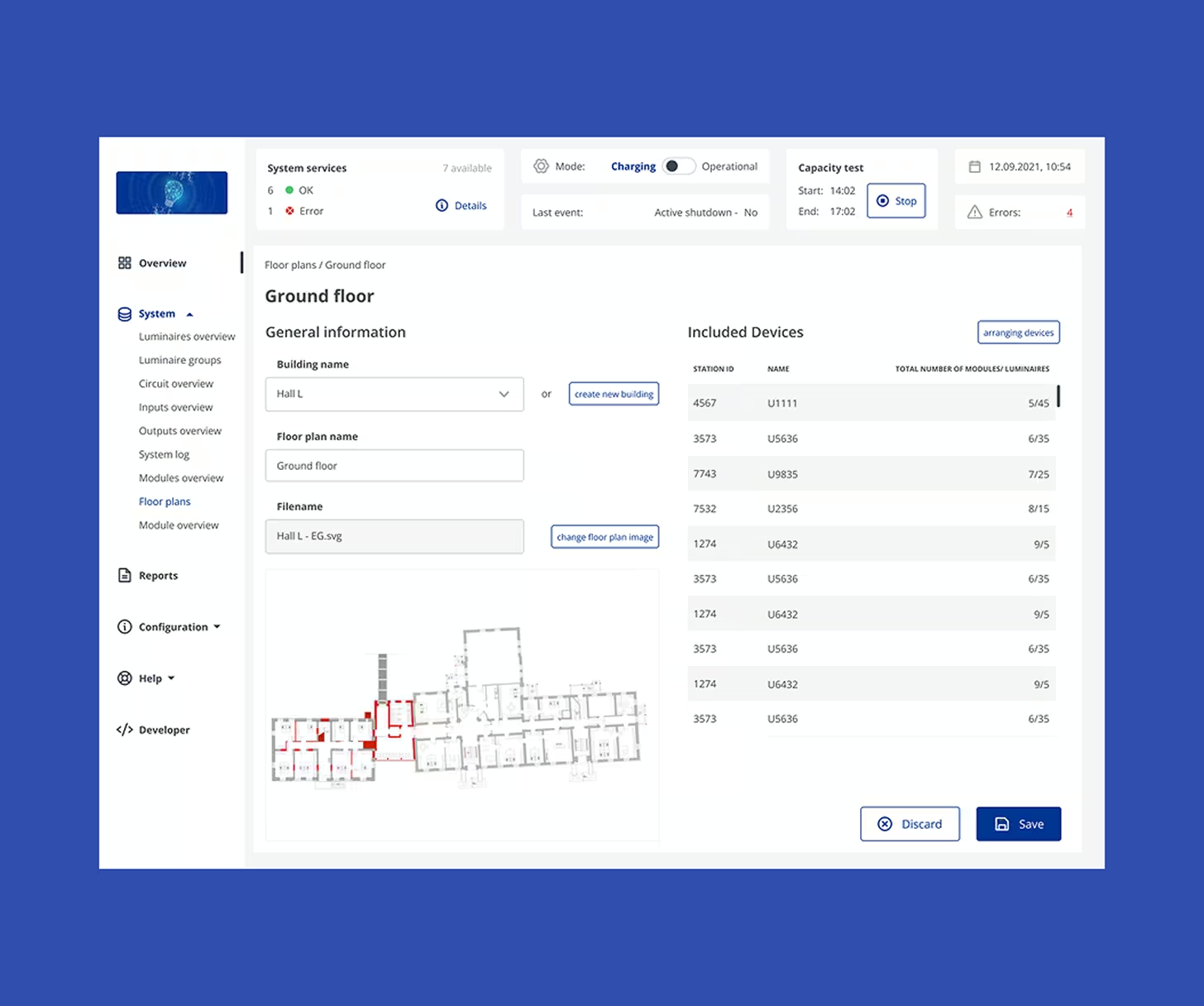
Proof — RP Group
For RP Group, we built a web app for managing emergency lighting systems - reducing inspection time by ~70%.
Turn sensor readings and machine data into clear insights, alerts, and operational workflows.
We design data-heavy interfaces that help users detect anomalies faster and make better decisions without digging through raw data.
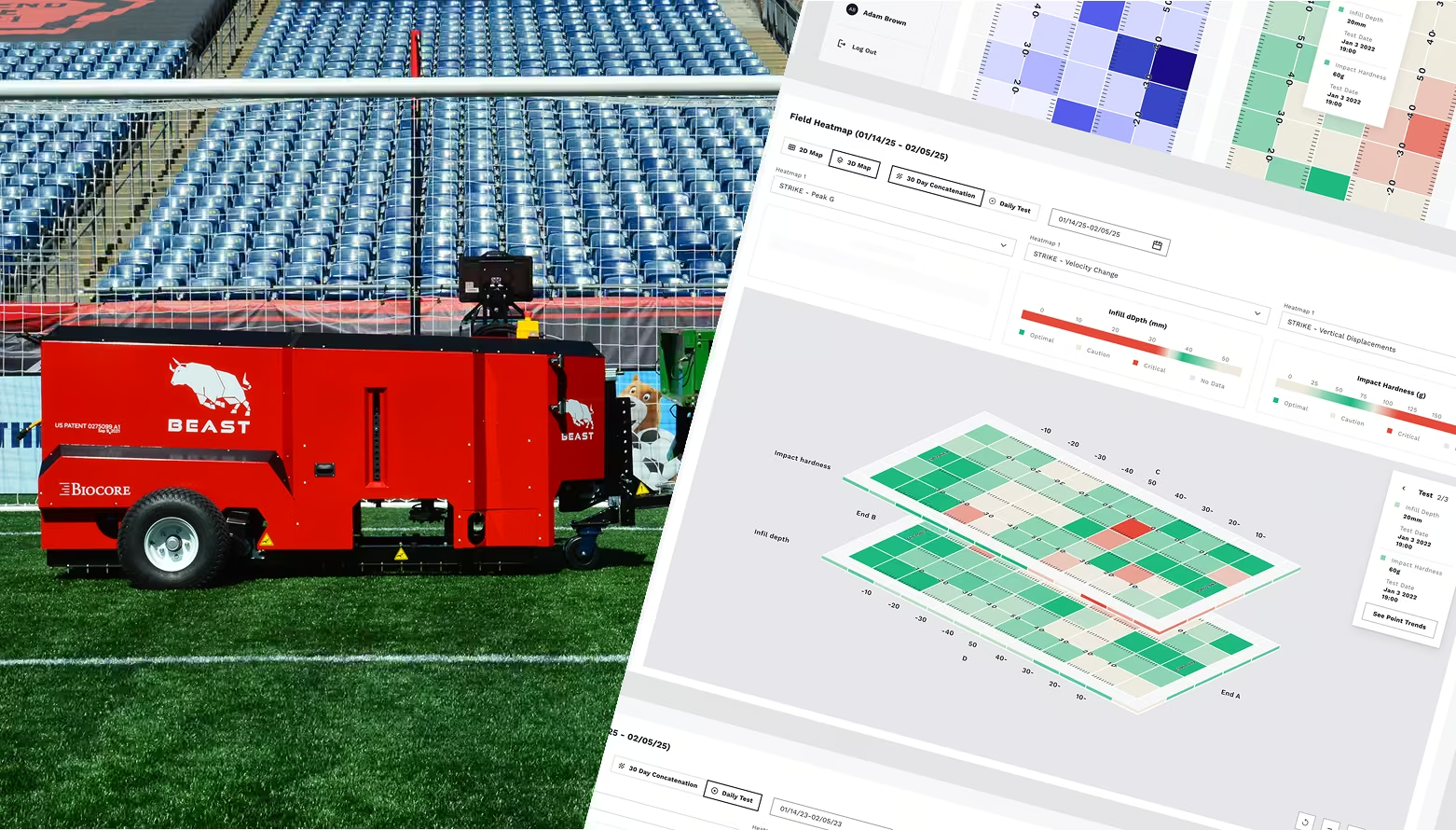
Proof — biocore
For Biocore, we built a biomechanical analysis dashboard that processes impact data 4x faster through advanced visualizations.
.avif)
Connect devices, APIs, internal tools, and cloud services into one reliable software ecosystem.
We build the backend logic, integrations, and data flows needed to support connected products in real operating conditions - including high data loads, multiple data sources, and evolving product requirements.
Proof — farmdroid
For FarmDroid, we built a real-time communication layer connecting autonomous field robots with a remote management app.
.avif)
Improve legacy platforms and prepare IoT software for long-term growth.
Whether you are extending an existing product or modernizing a platform around connected infrastructure, we help you improve usability, resilience, and maintainability without losing sight of business context.
Proof — biocore
For BEAST, we redesigned a legacy field analysis tool into a modern web application with data visualization and user-tested workflows.
.avif)
For RP Group, we worked on a backend-heavy system for managing emergency and safety lighting. The project sat on the edge of hardware and software, requiring us to find the most effective way to connect lighting systems with a web app while modernizing the overall solution.
.avif)
The development of a web-based solar modeling and proposal tool enhancing sales efficiency and customer engagement. Lorem ipsum Sic dolor amet.
~70% reduction in inspection time and a significantly improved user interface for operators and technicians.

We found Merixstudio through an extensive search for a reliable tech partner with a strong portfolio in user-friendly interfaces and coding experience with hardware related applications. We're absolutely satisfied with the results of Merixstudio's work. They raised the quality of the user interface significantly, a key factor for customer satisfaction.
.avif)
Web and mobile development for connected products
User-facing apps for monitoring, control, and device-related workflows
Backend development for data processing, integrations, and platform logic
Real-time dashboards, visualizations, and reporting interfaces
Integration with internal and external systems and tools
.avif)
Refactoring and extending existing IoT software products
Planning modernization of legacy platforms around connected systems
Designing secure architecture for connected environments (MQTT/TLS, encrypted data flows)
Performance optimization for high data volumes and continuous sensor streams
Integration of legacy systems with modern IoT platforms

Identifying business and user needs in connected products
Mapping product, operational, and data flows
Defining software architecture for IoT-heavy environments
Recommending technologies for apps, backend, cloud, and integrations
Designing for maintainability and scalability from the start
we know how to work alongside embedded teams and hardware partners
independently rated and verified by real client reviews
25+ years of helping mid-size and enterprise companies build and scale digital products - across Europe, the Middle East, and the US"
Information security and quality management built into our processes
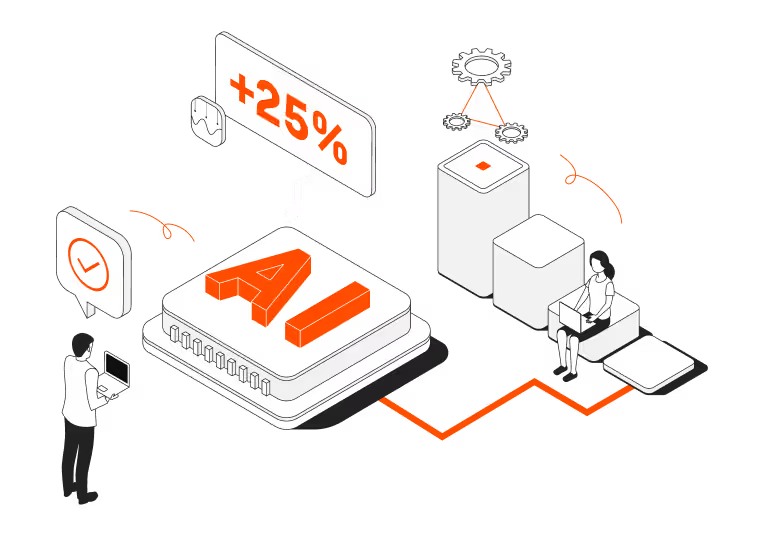
our teams use AI across development workflows, from coding and testing to analysis and documentation, accelerating delivery by up to 25%
.avif)


Our teams use AI across day-to-day delivery workflows, from coding and testing to analysis and documentation.
We track its impact through DORA metrics, and on selected tasks it can accelerate delivery by up to 25%.
.avif)
Our company has talented engineers (...), but we lack experience in UX and UI. Engineers and scientists see the world differently, and our software is for regular people or technically inclined people (...). Your expertise helps us create more usable products for a broader audience, rather than just the structured, technical approach of our team members.


Your service helps us make more informed decisions. Often, our initial idea isn’t what 95% of users would prefer, so your objectivity is crucial. Without your team, we wouldn’t be able to innovate or release new features as frequently as we do.
-1%201.svg)
We had changing requirements and changing team members but we always found a fast replacement in short terms - you always were able to respond. You always had devops, solution architects - people with different expertise available.


What Merix has been capable of is basically to look at what we’re saying, understand not what we’re asking for, but what the idea behind what we're asking for is. And that way they’ve able to understand our needs and our processes to develop a product that is correct for us rather than just to do what we say.


Merixstudio helps me solve problems and presents solutions in an easy-to-use, performant package. The software is simple, making it easier to understand complex things. The ultimate goal is not just building software but creating something that people use and that has downstream effects.


Tools that turn property data into decisions and real-time visibility, with AI compressing the time to value.
Applications for urban monitoring, traffic management, public safety, and sensor-driven city services.

Tools for field analysis, biomechanical data processing, and performance monitoring in professional and research environments.

Interfaces for connected medical equipment, patient monitoring, and clinical data management - with privacy and compliance built in.

Software for predictive maintenance, production line monitoring, quality control, and factory automation systems.
Software for connected machines, environmental monitoring, and remote decision-making in sustainability-focused and field-based operations.
for connected environments (MQTT/TLS, encrypted data flows)
tailored to operators, technicians, and end users
designed for high data volumes and continuous sensor streams
for connected environments (MQTT/TLS, encrypted data flows)
integrated into CI/CD (Semgrep, Trivy)
for information security and quality management (ISO 27001 & ISO 9001)




Custom IoT software development covers the full software layer built around connected hardware - from user-facing applications and real-time dashboards to backend systems, integrations, and data pipelines. Unlike off-the-shelf IoT platforms, custom software development for IoT is shaped by your devices, your users, and your operational context. This typically includes apps for monitoring and control, data visualization interfaces, API integrations, and the backend logic needed to process sensor data reliably at scale. The result is a complete software layer that turns connected hardware into a usable product.
We build the software layer that sits between connected devices and the people who use them. The most common types of IoT applications we deliver include customer portals for connected products, operational dashboards and control panels, remote monitoring and alerting platforms, field service and technician apps, and data visualization and reporting tools. Each serves a different user - from end customers checking device status to field technicians managing equipment on site. We scope the IoT application development process around your actual user roles, workflows, and data sources.
IoT platforms like ThingsBoard or AWS IoT Core provide general-purpose infrastructure - device connectivity, basic data ingestion, and standard dashboards. Custom IoT software is built on top of or alongside such a platform, adding everything it doesn't cover: the specific user interfaces your operators need, the business logic behind your workflows, the integrations with your internal systems, and the UX that makes your connected product genuinely usable. In practice, a custom approach often uses an IoT platform for connectivity while building a dedicated software layer for everything user- and business-facing.
Our IoT software development stack is chosen per project, but a proven combination includes React and Next.js for frontend interfaces, Python with FastAPI or Node.js for backend services, PostgreSQL for structured data, and MQTT for real-time device communication. For infrastructure and scaling, we rely on Docker, Kubernetes, and Terraform deployed on AWS. Map-based workflows - common in IoT development - use Google Maps, Leaflet, or Mapbox. For mobile, we work with Flutter. The final stack depends on your data volumes, real-time requirements, security needs, and integration landscape.
We step in at the software layer - not at the hardware or embedded firmware level. In the typical data flow, your team (or your hardware partner) handles devices and sensors. We join from the data pipeline stage onward: cloud ingestion, backend systems, business logic, integrations, and all user-facing applications - dashboards, portals, mobile apps, alerting. We can start as early as architecture planning and discovery, or join when you already have a working prototype and need to build the product software around it.
Yes, and this is our standard way of working. We don't build hardware or embedded firmware - we focus entirely on the software layer. We collaborate closely with your embedded engineers or hardware partners to understand data formats, communication protocols, and device behavior. This clear division lets each team focus on what they do best. We make sure the software side - from backend processing to user-facing apps - is designed to work reliably with what your devices actually produce.
Our custom IoT solutions are designed for companies that already have connected hardware or sensor-based infrastructure and need the software layer to make it usable. Typical clients include product companies building connected devices for end customers, industrial organizations managing distributed equipment or infrastructure, and teams modernizing legacy systems around sensor data. We work across industries - from smart infrastructure and facility management to precision agriculture and biomechanical engineering - wherever connected technology needs clear, usable software to deliver value.
Yes. Full rebuilds are rarely necessary and almost never the best first step. Common modernization approaches include replacing outdated frontends with modern, usable interfaces while keeping backend logic intact, refactoring specific backend services to handle higher data loads or new integration requirements, layering real-time dashboards on top of existing data sources, and tightening security and access control without disrupting current operations. We plan modernization around business priorities - improving what matters most to users and operations first, then extending from there.
We adapt the collaboration model to your product stage and internal capabilities. Options include a cross-functional team for end-to-end product development, fixed-scope delivery for well-defined features or modules, expert consultation for architecture planning and technology decisions, and maintenance and evolution support for products already in production. Most IoT engagements start with a discovery or architecture phase and evolve into ongoing development as the product grows.
A general software house builds applications without necessarily understanding the constraints of connected products - real-time data from hardware, protocol-level integration, high data volumes, or the operational context of field-deployed devices. An IoT software development company understands how to work alongside embedded teams, how to architect systems for unreliable connectivity and continuous sensor streams, and how to design interfaces that translate raw device data into workflows people can act on. The difference between working with a dedicated IoT development company and a general shop shows up in architecture decisions, UX for data-heavy environments, and how well the product holds up as complexity grows. A specialized IoT app development company also brings experience with the full data flow - from device protocols through backend processing to user-facing applications - which a generalist team typically learns on your budget.
Security is built into the architecture, not added afterward. Our approach includes encrypted data flows using MQTT over TLS, role-based access control designed for different user types - operators, technicians, administrators, end users - and resilient backend design for handling continuous sensor streams and high data volumes. We apply privacy-by-design principles for sensitive operational data and integrate security scanning into CI/CD pipelines using tools like Semgrep and Trivy. On the process side, we follow ISO 27001 (information security) and ISO 9001 (quality management) certified practices.
Integration typically follows a layered approach. Devices and sensors send data through protocols like MQTT or REST APIs to a data pipeline - often cloud-based ingestion using AWS or similar services. From there, backend systems process the data, apply business rules, and expose it to user-facing applications through APIs. Web and mobile applications then present it as dashboards, alerts, reports, or interactive workflows. Our IoT integration services handle the connection from the data pipeline onward, making sure the link between your devices and your users is reliable, scalable, and maintainable - even as you add new devices or data sources."
Off-the-shelf tools can cover basic device management, but they rarely match the specific workflows, user roles, and business logic that make a connected product genuinely usable. Custom IoT development services give you software shaped around your product - not a generic dashboard with your logo. The result is more usable products that users actually adopt, better operational decisions based on data translated into clear workflows, stronger product-market fit because the software layer completes the hardware, and a foundation for growth - reliable architecture and thoughtful IoT solution development that extends with your product rather than limiting it.
A focused MVP - like a monitoring dashboard connected to an existing device API - can typically be delivered in 8–12 weeks. More complex custom IoT solutions involving multiple integrations, real-time data processing, and apps for different user roles take 4–6 months for an initial production release. Most connected products then continue to evolve with ongoing custom IoT development (e.g. adding new features), new integrations, and scaling. We scope and plan delivery around your priorities so you get usable software early, not a big-bang release after months of development.
We've built IoT software across multiple industries, including smart infrastructure and facility management (real-time environmental monitoring, sensor-based building management), safety and emergency systems (backend-heavy platforms connecting hardware with web-based management), precision agriculture (remote management for autonomous field robots with map-based workflows), sports technology (data visualization and field analysis tools for researchers and field managers), and biomechanical engineering (scalable applications for analyzing high-volume impact data). What connects these projects is the shared challenge: turning complex sensor data and connected hardware into software that people can actually work with every day.
IoT software projects face a specific challenge: the complexity lives in two places at once - the data infrastructure underneath and the user-facing interfaces on top. Backend work involves protocol handling, data pipeline logic, API design, and integration with device APIs; frontend work involves real-time dashboards, map-based workflows, sensor data visualization, and multi-role interfaces. AI-augmented delivery addresses both sides by embedding AI into day-to-day engineering workflows wherever it creates measurable value.
In practice, AI assists with backend scaffolding for IoT data pipelines, generating boilerplate for MQTT integrations and API endpoints, writing test coverage for edge cases that are common in connected environments - connectivity loss, data spikes, device timeouts - and documenting integration logic that would otherwise live only in the team's heads. On the frontend, it accelerates dashboard component creation, real-time data binding patterns, and responsive layout variations across device types.
To keep AI disciplined in connected environments where a bug in the data layer can cascade across the entire product, we follow Spec Driven Development: every feature starts with a validated specification and acceptance criteria before implementation begins. Engineers act as architects and reviewers throughout, so AI operates within clear guardrails - which is especially important when working with systems where hardware behavior and software logic are tightly coupled.
We measure the impact through DORA metrics, giving clients clear visibility into how AI supports faster delivery, fewer bugs, and shorter feedback loops. Based on feedback from our entire engineering team, AI can accelerate selected tasks such as code generation, debugging, refactoring, and test automation by up to 25%.
Every AI tool we use is vetted by our technical and legal teams and governed by clear internal security policies. In our latest internal survey, 94% of team members confirmed awareness of data security rules for AI usage, and no project data is ever used to train external models.
.svg)
.svg)
.avif)

.avif)
.avif)
.avif)

.svg)